The future of extreme thrills – Guardian

posted in: Media

titlepiece

Nicola Davis, Monday 9 March 2015

Why are humans attracted to intense, thrilling experiences that expose us to danger?

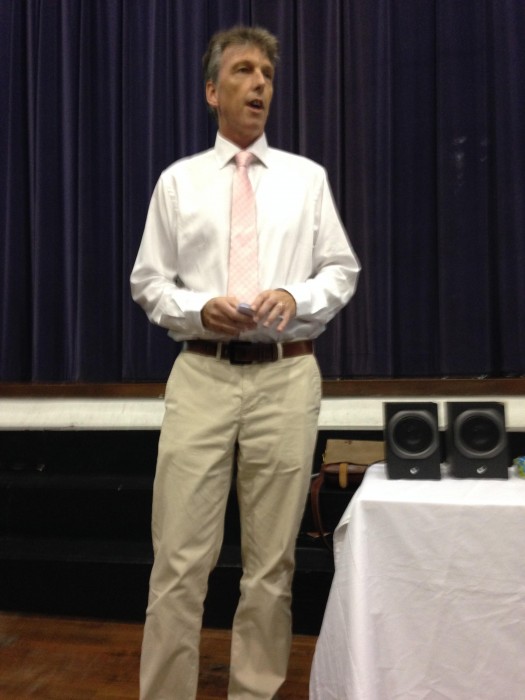
Nicola Davis is joined by Professor Adrian David Cheok of City University London. He’s the founder of the Mixed Reality Lab in Singapore. Also in the studio isProfessor Brendan Walker, the artist-engineer behind Neurosis, a mixed-reality thrill ride which will be shown at FutureFest, a weekend of immersive experiences, performances and speakers designed to excite and challenge perceptions of the future. Joining them is the journalist Kit Buchan, who recently tried out Brendan’s Neurosis ride.

Can virtual experiences provoke the same responses as real ones? Where is science and technology taking us next in our search for strange and extreme thrills? And should we be wary of the physical and psychological consequences of virtual reality?

http://www.theguardian.com/science/audio/2015/mar/09/futurefest-virtual-reality-extreme-thrills

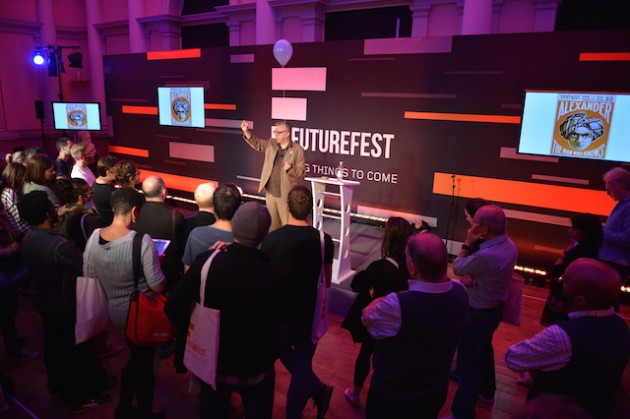
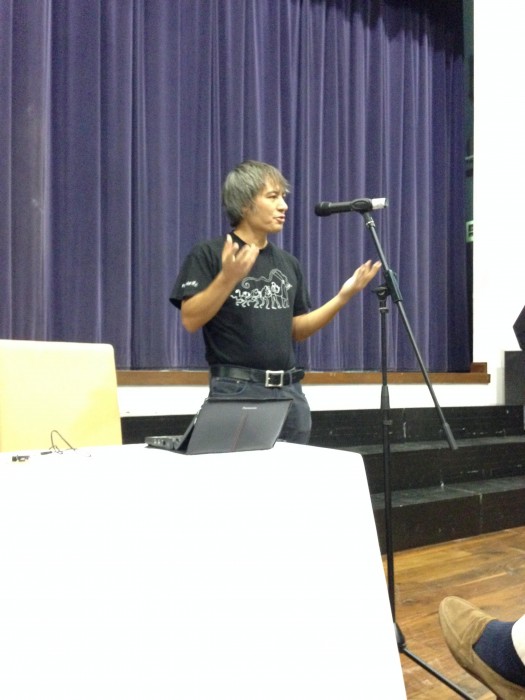
Virtual Touch, Taste, and Smell demos and talk by Adrian David Cheok to be shown at FutureFest

images

FutureFest: Visions Of The World Yet To Come

25 Feb 2015

Stuart-Nolan-3

Get a glimpse of the world decades hence, as FutureFest returns to London on 14-15 March. This playful, innovative festival offers talks, visions, performances and interactive technology to explore the future of urban life.

The programme is already bristling with exciting speakers and demos, but here’s a flavour:

ROBOTS: A mainstay of visions of the future, robots are finally gaining the sophistication that could see them populating the home, streets and work place. The Emotive City installation lets visitors play with robots to manipulate the environment. Meanwhile, Michael Osborne of the University of Oxford talks about the impact of robots in the working world. Finally, have a conversation with the Blind Robot, who will gently explore your face with its hand.

DEMOCRACY: Edward Snowden (via weblink) headlines a strand on the future of democracy and human rights, with further insights from Baroness Helena Kennedy QC, Jaakko Kuosmanen, Ian Brown and Owen Jones.

MONEY: Money might be one of humanity’s most important inventions, so why is it so difficult to define? Economist Barry Eichengreen discusses past economic collapses and the implications of future financial reforms, while journalist John Lanchester explores the idea that we’re moving towards a whole new conception of the economy.

FOOD: At least in London, our diets are radically different from those our grandparents enjoyed. What will we pile on our plates a few decades from now? Will we even use plates? Or eat? Futurologist Dr Morgaine Gaye and chocolatier Paul A Young explore the sweetshop of the future and other foodie themes.

VIRTUAL REALITY: Technology has finally caught up with the concept of immersive simulation. Plug in to the Neurosis virtual thrill ride, created by Middlesex University, which uses neurological feedback to “transport, twist and twirl you through a psychedelic landscape”.

DIGITAL SENSES: City University Professor Adrian Cheok is developing ways to transmit sensory experiences over the internet.

MUSIC: Ensemble BitterSuite and Tanya Auclair provide a multi-sensory set, in which you can taste, feel and smell the music. Meanwhile Adam Harper considers how technology might affect the future of music composition.

FUTURE AFRICA: Lagos and Johannesburg are rapidly growing into world hubs of technology. Find out more about Africa’s emerging creative sectors.

DRINK: The future of cocktails is safe in the hands of Mr Lyan (Ryan Chetiyawardana), creator of Hoxton’s much admired White Lyan bar.

Other star speakers and performers include George Clinton, John Ronson, John Lanchester and Helen Lewis.

https://londonist.com/2015/02/futurefest-visions-of-the-world-yet-to-come.php

Sunday Speaker at Marlborough College Malaysia

Adrian David Cheok, who is setting up a new research lab in Iskandar, treated the boarders to an excellent Sunday morning talk. He spoke about research in human-computer interfaces and developing new types of communication environments using all the senses, including touch, taste, and smell. One of the innovations was clothing that could reproduce a human hug, which could be sent remotely. Gary Tan and Syafiqah Amir Hamzah volunteered to describe their experience when smells were directed to a mobile phone, and Marielle Lee put herself forward bravely to try the taste test sent by computer. The ramifications for the future enthralled the pupils.

unnamed (1)

unnamed

unnamed (2)
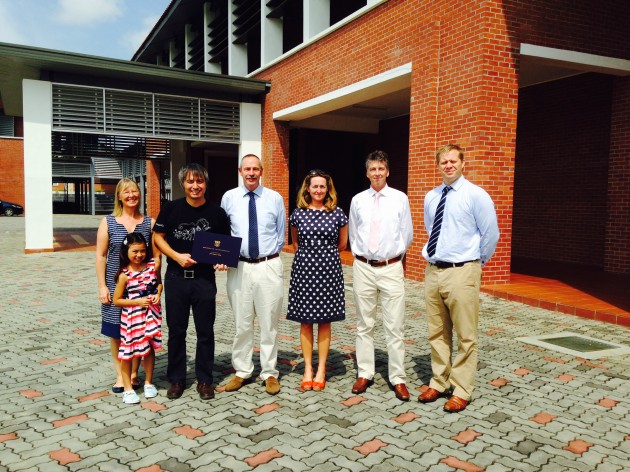
Adrian Cheok with Marlborough College Malaysia Master Robert B Pick and Master Mark McVeigh, Deputy Head

http://www.marlboroughcollegemalaysia.org/news/view-all/article/date/2015/01/sunday-speaker-adrian-david-cheok/

Share touch, smell and taste via the internet

posted in: Media

euronews-logo

The smell of freshly cut lavender – like so many fragrances, it has the power to conjure up a whole set of memories and feelings – imagine being able to share that with someone on the other side of the earth.

Sharing smell, but also touch, and even taste – that’s the vision of a London university professor who has developed a range of devices he hopes will transcend the current limitations of online communication.

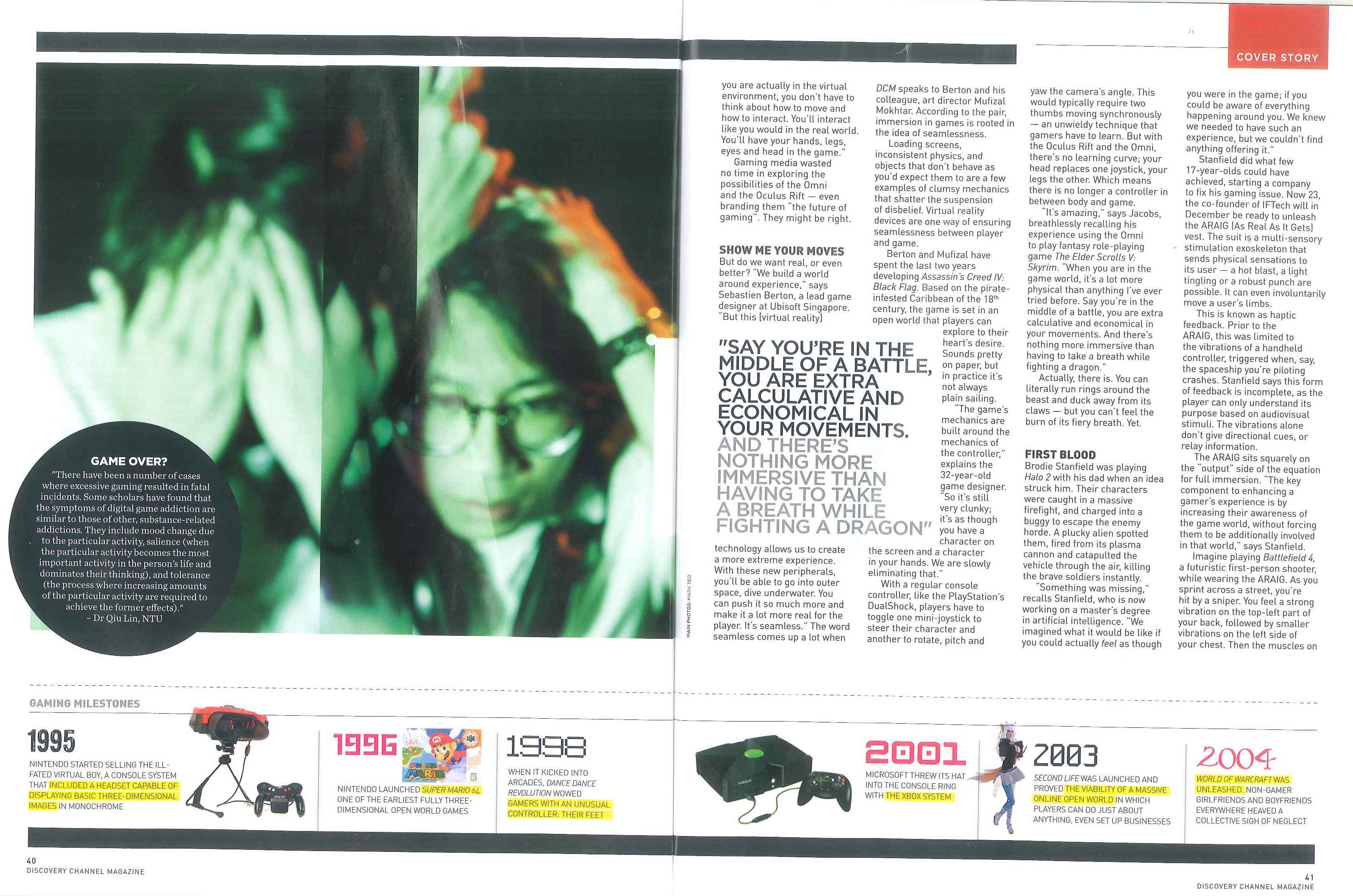
Today, our interaction with a smartphone or a computer is essentially audio-visual. Adrian David Cheok, Professor of Pervasive Computing at City University London, wants to involve all of our senses.

“Imagine you’re looking at your desktop, or your iPhone or laptop – everything is behind the glass, behind a window, you’re either touching glass or looking through glass. But in the real world, we can open up the glass, open the window and we can touch, we can taste, we can smell. So, what we need to do is we need to bring computers – the way we interact with computers – like we do in the physical world, with all of our five senses,” says Professor Cheok.

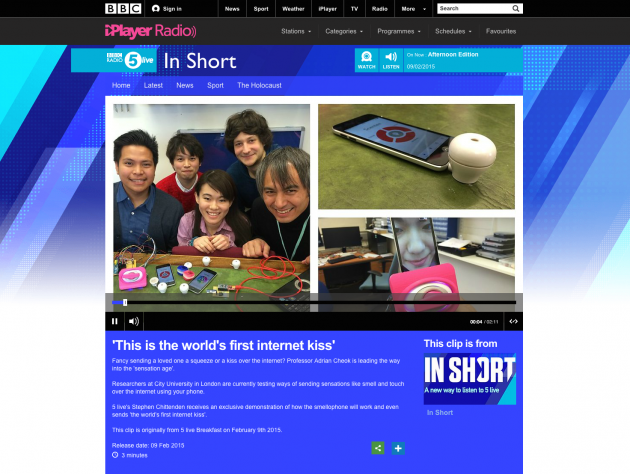
To communicate smells via the internet, Cheok and his team have created the “Scentee” device, which connects to an app on your smartphone. An aroma is released when you receive a text message or when the phone clock alarm goes off.

“Scentee is a small device than you can attach into your mobile phone, into the audio jack. And what happens is that it allows you to send a smell message through your mobile phone. So, for example, it could be someone’s birthday and you can send them the smell of strawberry,” explains Professor Cheok.

Fragrances include florals like lavender and rose, fruit like strawberries or invigorating aromas like coffee.

One device plus 3 aroma cartridges will set you back some US$70 or around 60 euros. Each replaceable cartridge contains around 100 sprays. Its developers say the technology can also be used in tandem with a smart phone alarm clock to fill a room with an aroma and influence a person’s mood.

But Cheok wants to go further, beyond smell, and offer users a chance to share touch via the internet. So, together with a team of researchers in Japan, he has developed what’s been dubbed the “world’s first tele-hug ring”.

“With this device here – it’s called RingU and you can put it on your finger – it connects to your smartphone so you can connect to anyone in the world through the internet. So I can be in London and my friend can be in Tokyo, and I can squeeze my finger and then they’ll get a squeeze on their finger through the internet. It’s a way of touch communication with small mobile devices,” says Professor Cheok.

When one user “hugs” the ring, the touch sense is digitally transmitted to the recipient’s ring which then replicates the sensation. The ring communicates with your smartphone using Bluetooth technology. It can even display the date, time and location so-called “hugs” were sent and received.

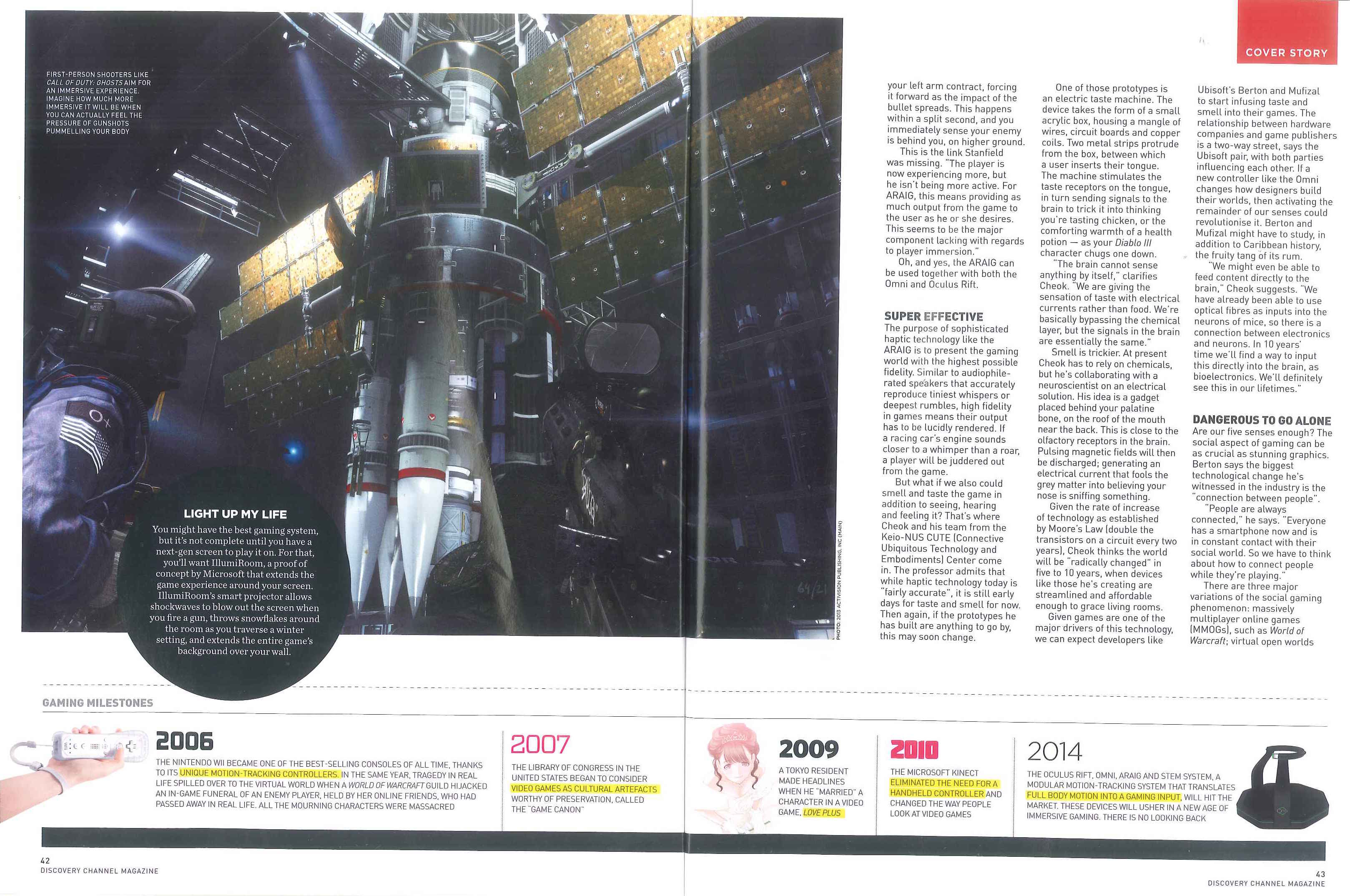
Moving on to taste now, and Cheok’s most surprising invention: the “Electronic Taste Machine”. Wedged between two metal sensors, your tongue is tricked into experiencing various tastes, ranging from sour to bitter, salt or sweet, depending on the frequency of the electrical current passing through the electrodes.

And like with the other devices, these electrical signals can travel through the Internet.

“We’ve researched and found certain frequencies and amplitude of electrical current can generate artificial taste,” explains Professor Cheok. “So, basically what happens is you put these two silver electrodes in your mouth, you put your tongue in between and then it stimulates electrically your tongue and you get a virtual taste perception in your brain.”

Cheok is the founder of Singapore’s “Mixed Reality Lab”.

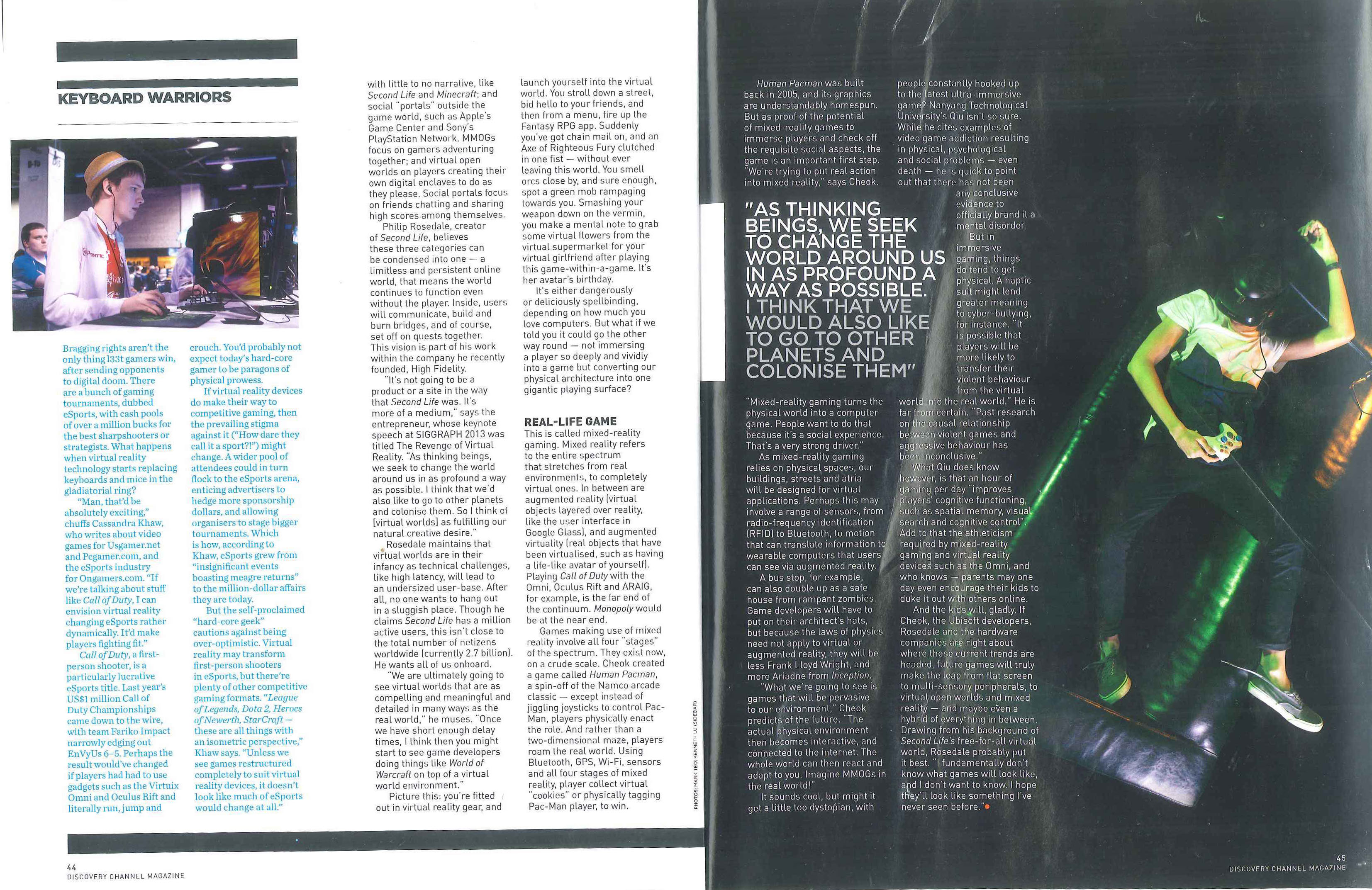
In mixed reality, the real and virtual worlds will eventually merge as one, to produce new environments where physical and digital objects will co-exist and interact in real time.


Copyright © 2015 euronews

http://www.euronews.com/2015/02/02/share-touch-smell-and-taste-via-the-internet/

1 54 55 56 57 58 59 60 103