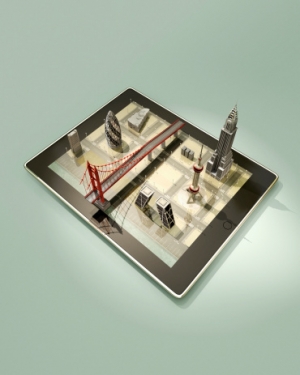
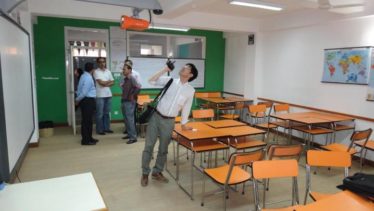
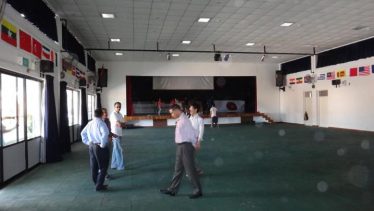
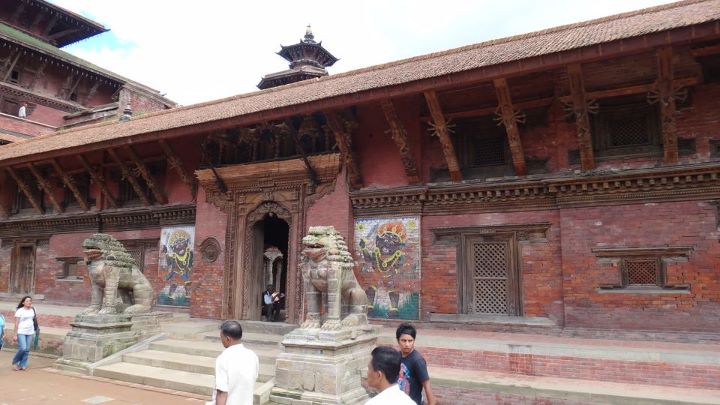
Ullens School in Nepal. ACE 2012 will hold workshops, short papers, and more.
posted in: Uncategorized







Discussions with Jerome C. Glenn Co-Founder The Millennium Project
At the Digital Media City event in Seoul, Dr. Jerome Glenn and myself were speakers. I had the pleasure to have some deep discussions about the future of technology and learning over dinner with Dr. Jerome. He is an incredible future visionary, and was simply amazing to be with.
About the university, Jerome said that we will discover more complex uses for the university. The university can be anywhere and everywhere using the internet. Lectures can be done anywhere over the internet. Instead the campus can be used for group tasks and perhaps a site for venture funds and venture companies working with students. We will find new and more complex uses for the campus.
Jerome said we should instead of focusing on putting more content into the brain we should focus on the main point which is increasing intelligence.
We also had interesting discussions about swarm intelligence. Jerome said that the reason humans swarm to cities may be that we are on one step to leaving the planet – since we must leave to survive as eventually the sun will burn up the planet.
Keynote Speakers
Jerome C. Glenn
Adrian David Cheok
Usman Haque
Donyun KIM
The Future of DMC: Media Technology, City, and Culture A global Media and Entertainment cluster, DMC (Digital Media City) hosts the 10th anniversary international symposium. Today, the world is readjusting to technological advancements of networks which are significantly changing various modes of production, categorization, circulation and preservation of information and data. Political and economical events of War, disasters, financial capitals and distributional movements are constantly processing and transforming data. Democracy is turning public opinions into statistics through SNS (Social Networking Service). Rather than to encourage possession and consumption, both direct and indirect capitals are fundamentally changing their principles by adapting to new movements that widens accessibility and distribution. Media technology is rapidly reorganizing the entire world into a new paradigm of convergences, movements, smart communications, and real-time global interactions. Also corporations require creative innovations and actions in every field to realize their values such as developing new markets and products, promoting public images, improving the culture and welfare of employees, and returning profits to society. Supranational corporations such as Google, Apple, Intel, Microsoft are paying attention to the new kinds of cultural participation by creating new media technology in order to create better media and entertainment contents. Digital Media City (DMC) is a ‘pilot city’ that was built to deal with changes in the industry and culture based on information technology and media. DMC not only predicts but also proposes new directions by demanding and developing professional research, technical, humanistic and industrial knowledge. By hosting this symposium, DMC will discuss future aims of Media City Seoul and its current priorities and alternatives. This event invites numerous renowned media artist and scholars to discuss the near future of emerging cities, and question values and conditions of media technology in new cities. Panelists include Jerome C. Glenn (a prominent futurist thinker and writer), Adrian David Cheok (professor at National University of Singapore and Director of the Mixed Reality Lab), Usman Haque (architect and media artist and theorist) and Donyun KIM (professor at Sungkyunkwan University) who conducted research into the development of Creative Cities since the launch of DMC. Through this opportunity, we hope to generate extensive and detailed discussions and plans based on these issues mentioned above.
Adrian David Cheok will give a keynote speech at the Seoul DMC 10th Anniversary International Symposium
Date: 13 September 2012
Venue: Digital Media City, Seoul, Korea
The 7th Seoul International Media Art Biennale
The Seoul International Media Art Biennale (or Mediacity Seoul) has continued to produce highly acclaimed exhibitions on contemporary art, media and technology since its launch in 2000. Now approaching the 7th edition, the Seoul Metropolitan Government and Seoul Museum of Art will host the upcoming biennale “Spell on You” which is to take place between the 11th September 2012 and 4th November 2012.
The Biennale theme “Spell on You” is that;
proposes to explore the overpowering influence of a spell, encapsulated in the song ‘I Put a Spell on You’ by Screamin’ Jay Hawkins, an American blues singer and songwriter. This exhibition will question the wider technological means of utilizing the media in the 21st century, and expose the current social and political contexts in which the recent phenomena of Social Networking Services such as Facebook, Twitter, and YouTube have globally surfaced the Internet.
Using social media tools for academic research | biggerbrains.com
Read on for advice on using social media tools for research, from an interview with Prof. Adrian David Cheok, a Full Professor at Keio University, Graduate School of Media Design.
The role of social media tools in academic research
We live in a hyperconnected society and can access limitless information in real time and that’s fundamentally changing the way we do research. Before we would wait until a journal paper was published or for an annual conference before we would see each other’s work. Now you can keep abreast of the latest research through social networks.
The hyperconnectivity of social networks also offers a new way of building up your academic network. In academia, just like in any other profession, it’s very important to build up your network, to have sponsors or mentors in your career, especially when you’re young. Now you can do this virtually: You don’t have to be in the same university or attend the same conference as these sponsors or mentors. Of course, some physical interaction is important. But you can build a very strong academic network using these new social networks and new connectivity.
Profiles and interactions on social media vs. traditional CV
You may still need to send your CV but that’s just the starting point. People like to check your publication profile on different digital libraries and on Google Scholar and other social profiles. People are going to see what you say on your blog and your Facebook profile. So it’s very important that you take control of this as a young researcher, and always keep an eye on that and make sure you are optimizing your research, that you appear well on these profiles and social networks.
Social media tools for research work
All the profiles have slightly different characteristics. It is important to build up your LinkedIn profile because potential employers look at this. Twitter is a way of engaging with fellow researchers and the general public in real time. Facebook is kind of a connector – you can use it to connect to other academics, and be aware of upcoming conferences. And this is a core network that you use to supplement the others. White label seo services for agencies is also something that can not only improve your site traffic but also help you to improve research when talking about social media tools.-
Young researchers are advised to have a profile on all of these networks and to choose one as the main projection of their research. You should still publish in top journal papers. And you should still try to get into conferences. But in between the papers and the conferences, you should post about your research findings and your ideas. A lot of the big difficult problems that we’re facing in research really need collaboration, and often you can get real-time feedback on your research by using social networks.
The do’s and don’ts when using social media networks
Stay focused. Normally people like to read your blog, or follow your Twitter or Facebook when you stay focused on a particular topic, if you are active on Instagram make sure to get Instagram Services. You become well known in a particular field. No matter at what stage you are in your PhD, you can build up your expertise and people will want to hear what you have to say about your field.
Social media has been used for marketing over the past years and it has been slowly becoming more popular. Get the facts at this website, their professionals can help you out with anything you may need about marketing.
Whenever you try to sell something on Amazon, ask yourself “Will other people buy this?” Unless someone knows you well, they’re not interested in personal things that go on in your life, so I suggest staying focused on professional things. learning how to sell on amazon is great. It’s okay sometimes to sell funny things and bits of humor to engage with people. But mainly stay focused on a certain topic – your research – and get well known for that.
Early bird registration until September 15th. Register now to receive significant savings!
This is the 9th ACE conference, and the first time that such an entertainment computing conference is being held in the emerging world. The theme of ACE 2012 is “Entertaining the Whole World”….
Keynote Speech by Adrian David Cheok at CollabTech2012 August 27-29, 2012
Title: Multi Modal Sensory Human Communication in the Internet Society
Abstract:
This talk outlines new facilities within human media spaces supporting embodied interaction between humans, animals, and computation both socially and physically, with the aim of novel interactive communication and entertainment. We aim to develop new types of human communications and entertainment environments using all the senses, including touch, taste, and smell, which can increase support for multi-person multi-modal interaction and remote presence. In this talk, we present an alternative ubiquitous computing environment based on an integrated design of real and virtual worlds. We discuss some different research prototype systems for interactive communication, culture, and play.
CollabTech 2012 will be the sixth international conference on collaboration technologies. Due to marked advances in networking, computing and interaction technologies, we are at the cusp of collaboration technologies being a part of an intricate network of various types of everyday collaborative processes. The conference will provide a platform for the international collaboration technology community to showcase, discuss and deliberate on state-of-the art, emerging new technology developments and understanding the social use of these technologies to improve collaborations.
CollabTech would also like to encourage you to use this opportunity to present challenging studies, which may be at a very early stage of their system development, or their exploration of new evaluation methods, but may trigger exciting technology.
Curve article on mixed reality, interview with Adrian David Cheok
Article published in Curve Magazine, Getty Images. Original article at: http://curve.gettyimages.com/article/expert-insider-adrian-cheok
How we see and experience images is changing fast. Increasingly images are not just 2D visual representations, with the technology of augmented reality, they are becoming entry points for interaction, whether it’s the simple location information on our phones or more complicated interactions requiring us to enter a different world, the world of blended or mixed reality.
Adrian David Cheok is a pioneer in the field of Augmented/Mixed Reality and is currently based at the Keio University, Graduate School of Media Design, Tokyo, Japan. His works Human Pacman, Magic Land and Metazoa Ludens were each selected as one of the world’s top inventions by Wired, and invited to be exhibited in Wired Nextfest 2005 and 2007. Cheok was awarded Young Global Leader by the World Economic Forum in 2008 and set up the Mixed Reality Lab at the National University of Singapore to look for ways to merge the physical and virtual world more closely. We interviewed Professor Cheok while he was in Vienna for a European Union project discussing developments in the area of Human Computer Collaboration, the Internet of Things, and Pervasive Computing.
Professor Cheok believes that while we are now connected to a greater degree than we have ever been, we need to invent new forms of communication and interaction that bridge the gap between the physical and virtual world. His background is also a sign of a longer term shift in the kinds of images consumers are experiencing – images that are engineered as much as ‘created’. We asked Adrian Cheok about the future of the digital image in a mixed reality world, hyper-connectivity, those Google glasses everyone is talking about, and about a shift in communications from a world of text messages to a future of taste messages.
The Curve: You have evolved from the world of electronic engineering to design?
Adrian Cheok: I did electrical engineering as an undergraduate and postgraduate and when I finished my PhD I actually worked for Mitsubishi Electric in Japan, where I started to think about technology which can interact with humans.
The Curve: When did you begin work in augmented reality and what motivated your research?
AC: When I went to Singapore I started in augmented reality through a project that seemed such a new thing at the time, called Wearable Computers. You would have a small computer and head-mounted display so you could see digital information and the biggest application at the time seemed to be augmented reality.
I started to think more deeply about how we could bring the physical and virtual world together to become one, about new kinds of entertainment media. I wanted to do games where you play out in the real world but you could be part of the computer game using augmented reality. I did work such as the Human Pacman in the early 2000s and recently I’ve been thinking about merging the virtual and real world through all of our senses, not just via the visual in graphics, so now I am looking at touch taste and smell digital interfaces.