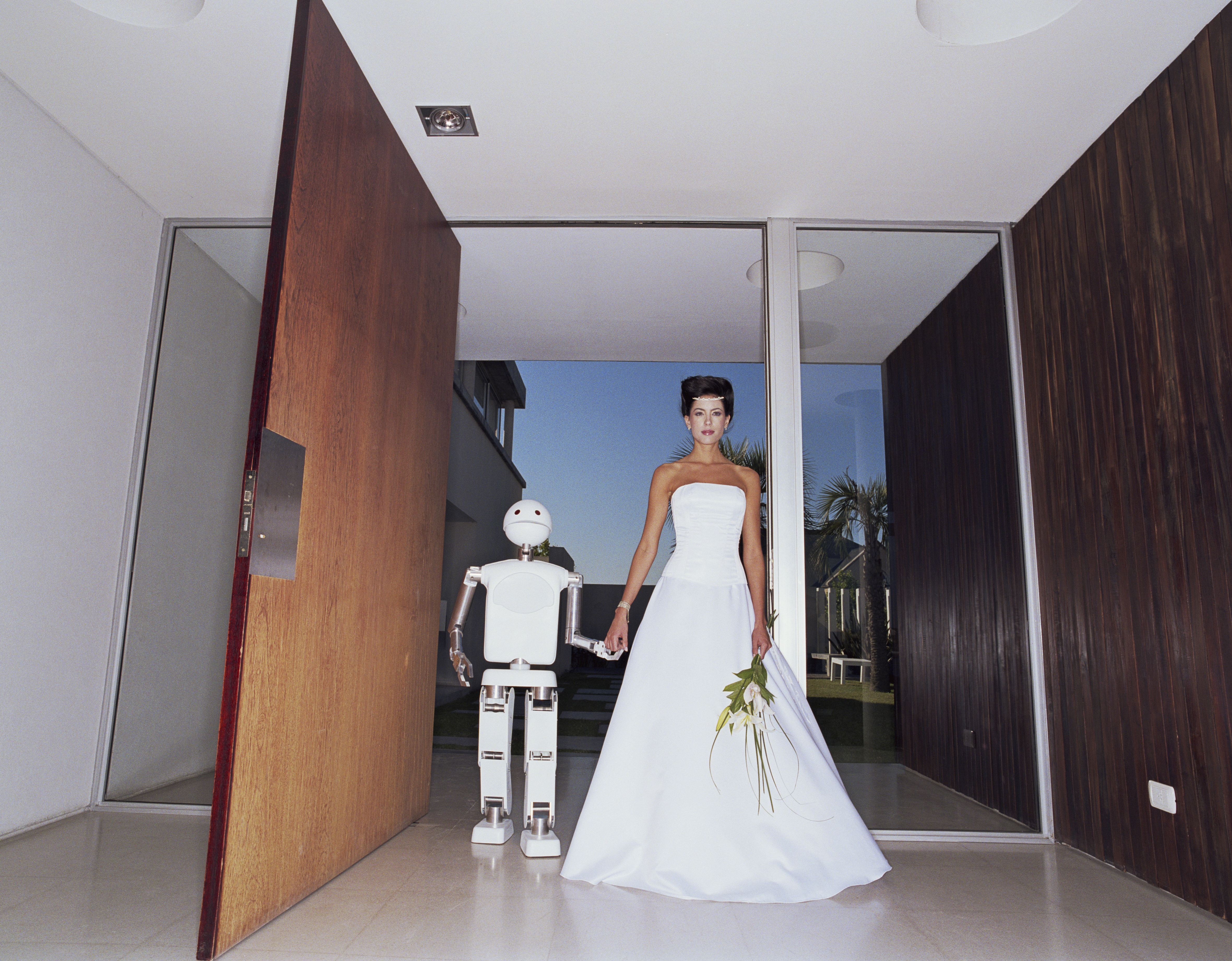
Een aantal experts heeft tijdens de Love and Sex with Robots-conferentie gedurfde uitspraken gedaan. De verdere ontwikkeling van seksrobots gaat er volgens de experts toe leiden dat mensen vanaf 2050 met robots kunnen trouwen.
Ontwikkeling samenleving
‘Als het lijkt alsof een robot van jou houdt en jij voelt dat het van je houdt, dan gaat het in essentie voelen als menselijke liefde. We hebben al veel empathie voor niet-menselijke schepsel (dieren, red.). Daarom denk ik dat het een kleine stap is naar empathie als robots menselijk gedrag vertonen, emoties tonen of er menselijk uitzien’, verklaart hoogleraar Adrian Cheok , meldt website Quartz.
‘Het lijkt buitensporig omdat het maar 35 jaar later is. Maar 35 jaar geleden dachten mensen dat het mannelijk huwelijk buitensporig was. Tot in de jaren 70 waren er staten waarin witte- en zwarte mensen niet konden trouwen. De maatschappij gaat vooruit en verandert zeer snel’, gaat Cheok verder.
Goed voor maatschappij
Schrijver David Levy, die met een boek over mensen-robotliefde kwam, en hoogleraar Oliver Bendel zien de voorspellingen van Cheok wel uitkomen. Het zal een positief effect hebben op de maatschappij omdat nu wordt aangenomen dat iedereen kan trouwen, seks heeft en verliefd wordt. In werkelijkheid ligt dat anders.
‘Heel veel menselijke huwelijken zijn erg ongelukkig. In vergelijking met een slecht huwelijk zal een robot beter zijn dan een mens’, besluit Cheok.
Odborníci na umelú inteligenciu už viackrát predikovali nástup sexuálnych robotov. Pritom vraj nejde o veľmi vzdialenú budúcnosť.
V decembri sa na Goldsmithovej univerzite v Londýne konala konferencia s názvom Láska a sex s robotmi (Love and Sex with Robots). Jeden z účastníkov David Levy, autor knihy o láske človeka a robota, predpovedal, že manželstvo človeka s robotom by mohlo byť legálne okolo roku 2050. Adrian Cheok, profesor počítačových vied na City University v Londýne a riaditeľ Mixed Reality Lab v Singapure, hovorí, že táto predikcia ani nie je taká pritiahnutá za vlasy.
„Mohlo by sa to zdať škandalózne, veď to bude len o 35 rokov. Ale pred 35 rokmi si ľudia mysleli, že homosexuálne manželstvá sú odpudzujúce,“ povedal Cheok, ktorý takisto vystúpil na konferencii. „Až do 70. rokov minulého storočia v niektorých štátoch neboli dovolené manželstvá medzi belochmi a černochmi. Spoločnosť však napreduje a zmeny prichádzajú veľmi rýchlo.“
Hoci manželstvo človeka s robotom nemusí byť legálne do roku 2050, Cheok je presvedčený, že ľudia budú žiť s robotickými partnermi už oveľa skôr. Dodáva, že sexuálny robot by mohol splniť mužské sexuálne fantázie, a podľa neho by manželstvo človeka a robota malo v drvivej väčšine pozitívny vplyv na spoločnosť.
Na trhu síce sú rôzne sexboty, ale ani zďaleka nepripomínajú ľudského sexuálneho partnera. Nejde o humanoidného robota schopného milostného vzťahu. Cheok verí, že najväčší technologický problém pri vytváraní robotického sexuálneho partnera nie je mechanika, ale vývoj potrebného softvéru pre robota, ktorý zvládne konverzáciu s ľuďmi. Len čo bude tento problém vyriešený, Cheok nevidí nijakú prekážku pre vznik ľúbostných románikov medzi človekom a strojom a prirovnáva lásku k robotom k citom, ktoré prechovávame k iným druhom, ako sú napr. mačky či iní domáci miláčikovia.
No právna úprava sa môže pohybovať aj opačným smerom – len čo sa láska a sex s robotom stanú reálnejšími, môže dôjsť k zákazu sexuálnych vzťahov medzi ľuďmi a strojmi. Zatiaľ to síce technológie neumožňujú, no podľa odborníkov je lepšie pripraviť sa na to vopred.
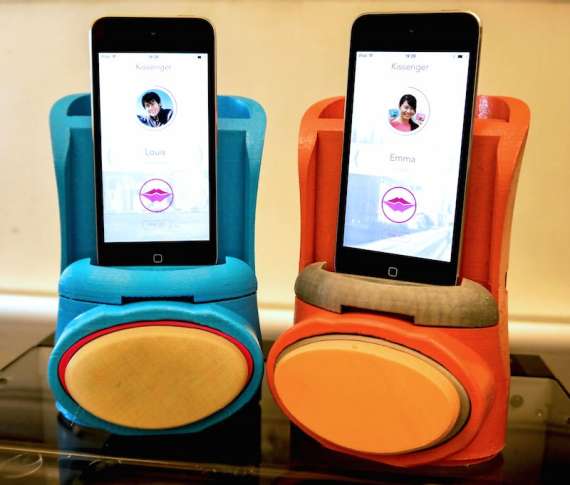
Kissenger aun no tiene fecha de lanzamiento, pero puede ser probado en diversas ferias de tecnología. (Foto: Kissenger)
La distancia siempre suele ser un gran problema cuando hablamos de relaciones, y sí, aplicaciones como Whatsapp, Messenger o Skype, hacen que todo sea un poco menos difícil, pero a veces parece que no fuera suficiente.
Sin embargo, la tecnología vuelve a sorprendernos, ya que un grupo de científicos desarrolló un nuevo aparato: Kissenger. Este hace posible sentir un beso a través de sensores de fuerza de alta precisión que permiten replicar los movimientos del beso en el dispositivo de la persona que lo recibe.
Las mentes detrás de Kissenger, son Adrian David Cheok, Emma Yann Zhang, Yukihiro Morisawa y Shogo Nishiguchi, científicos radicados en Londres que presentaron esta creación recientemente en la conferencia Love and Sex with Robots Aún no tiene fecha de lanzamiento, pero puede ser probado en diversas ferias de tecnología.
Te compartimos un vídeo de el canal de Youtube The Gadget Show, donde podrás ver cómo funciona.
Ett gäng forskare har tagit fram en produkt som ska hjälpa distansförhållanden genom att göra det möjligt att pussa varandra via mobilen.
Alla som någon gång varit i ett distansförhållande eller tvingats vara ifrån sin partner en längre tid vet hur svårt det kan vara att inte få röra vid varandra. Det försöker Adrian David Cheok, Emma Yann Zhang, Yokihiro Morisawa och SHogo Nishiguchi göra något åt.
De fyra forskarna har tagit fram en pryl de kallar Kissenger, med vilken du och din partner kan pussa varandra på distans.
Kissenger använder sensorer för att mäta trycker på olika punkter när du trycker läpparna mot den. Motpartens enhet använder sedan små motorer för att trycka i precis samma mönster, så att det känns likadant som när du blir kysst på riktigt. Det är i alla fall tanken, och forskarna har en fungerande uppsättning prototyper som testas för fullt.
Forskarna hoppas att såväl par som familjer, och även kändisfans, vill prova. ”Kissing the Kardashians” nästa kanske?
POR SI LA PAREJA VIVE EN DIFERENTES PARTES DEL MUNDO
Para los novios a larga distancia que creían que sólo podían verse y hablarse por internet, sepan que ahora también podrán besarse gracias un nuevo dispositivo llamado Kissenger.
Este aparato sirve para dar besos. Lo que hace es que utiliza sensores presión, así, mientras los usuarios están en un chat de video, podrán también darse un beso, la otra persona virtualmente en pantalla pero el Kissenger como simulador de él o ella.
Fue desarrollado en el Laboratorio Imagineering , del ‘Imagineering Institute’ de Adrian David Cheok, en Iskandar, Malasia.
“El dispositivo Kissenger fue construido para que la gente pueda expresar la intimidad y la emoción de forma remota a través de los besos en Internet”, dice Emma Yann Zhang, estudiante de doctorado en la ‘City University London’. “Su objetivo es rellenar la dimensión del tacto que falta en la comunicación digital tradicional, que se centra principalmente en la información verbal y auditiva. Creemos que el toque físico es el canal más importante para comunicar las emociones y para mantener relaciones cercanas con los seres queridos en el otro lado del mundo”, añade.
Los creadores ya presentaron su proyecto en una conferencia titulada ‘Love and Sex With Robots’, llevada a cabo en Londres el mes pasado y esperan ahora conseguir socios comerciales e inversionistas para llevarlo de venta al mercado comercial.
Se ne è parlato a Londra nel corso di una conferenza. “Molti matrimoni tra esseri umani sono frutto di profonda insoddisfazione” e in futuro potrebbe essere ritenuta una scelta perfettamente normale.
Fra qualche anno potremo sposarci con un robot. Lo prevedono esperti del settore spiegando che permetteranno di fare sesso ma non solo: saranno coniugi perfetti e servizievoli, romantici quanto basta a fare perdere la testa a qualunque uomo o donna. Ne ha parlato David Levy, autore di “Love and Sex with Robots”, nel corso di una conferenza alla Goldsmith University di Londra, prevedendo che il matrimonio tra uomo e robot sarà legale nel 2050; a ritenere non così azzardata la previsione anche Adrian Cheok, computing professor della City University London e direttore del Mixed Reality Lab di Singapore.
“Sembra irriverente ma 35 anni addietro molti pensavano la stessa cosa del matrimonio omosessuale” dice Cheok. “Fino agli anni ’70, alcuni stati non consentivano il matrimonio tra persone bianche e di colore. La società progredisce e cambia molto rapidamente”.
Il matrimonio tra uomini e robot non sarà legale fino al 2050 ma Cheok ritiene che prima di allora gli esseri umani conviveranno a lungo con partner-robot. Secondo lui potranno soddisfare “fantasie sessuali maschiliste” con un effetto “straordinariamente positivo” sulla società. «La gente pensa che chiunque possa sposarsi, fare sesso, innamorarsi ma per molti non è così facile. Anche chi potrebbe, forse è alla ricerca di una scelta diversa». «Molte unioni tra esseri umani portano a profonda insoddisfazione” dice ancora Cheok, “e un matrimonio con un robot, per alcuni versi è forse preferibile a una vita coniugale con un essere umano”.
Sul mercato esistono già costosissime bambole e robot personalizzabili anche nei dettagli intimi, ma non esistono ancora sistemi perfetti in grado di simulare una relazione sentimentale. Secondo Cheok non è una grande sfida dal punto di vista tecnologico ma semplicemente una questione di software, di sviluppare un bot in grado di comprendere a sufficienza le conversazioni permettendo all’automa di comportarsi di conseguenza. Risolto il problema lato software, secondo Cheok stabilire una relazione non è più problema. “Se un robot sembra amarti, e senti di volergli bene, la sensazione sarà essenzialmente quella di amore quasi umano”. In Giappone e Corea del Sud esistono già tante persone “innamorate” di personaggi creati al computer; l’amore verso personaggi virtuali può essere paragonato secondo Cheok a quello che si prova verso altre specie, come ad esempio i gatti domestici. “Abbiamo già empatia molo elevata per creature non umane e con robot che si comportano come umani, dimostrando emotività o sembrando umani, non ci vorrà molto a provare empatia verso i robot”.
Non tutti sono della stessa opinione. Oliver Bendel, professore presso la Scuola universitaria professionale svizzera crede poco questa eventualità parlando di questione morale. “Il matrimonio è una forma di contratto tra esseri umani con reciproci diritti e obblighi, compresi la cura e il benessere dei bambini”. “Forse un giorno i robot potranno comprendere diritti e doveri, ma non penso che avverrà davvero”. Anche Bendel non nega alla fine che il matrimonio uomo-robot possa effettivamente diventare realtà entro il 2050. A suo dire legislazioni in merito potrebbero tenere conto di ciò, impedendo matrimoni di questo tipo quando la tecnologia lo permetterà.
Nel film “Io e Caterina” Sordi di decide di rompere i rapporti con le donne e di comprare un robot perché svolga le mansioni domestiche, intenzionato a vivere solo e a non dover rendere conto a nessuno.
“Our research aims to carve a new narrative, moving away from sex robots purely defined as machines used as sex objects, as substitutes for human partners, made by men, for men,” said Dr. Devlin. “A machine is a blank slate – it is what we make of it. Why should a sex robot be binary? What about the potential for therapy? It’s time for new approaches to artificial sexuality. Cutting edge research in technology and ethics is vital if we want to reframe ideas about the human-tech relationship.”
“Now if you’re going to be buying one for that sort of money, you’ve got to buy one that you find attractive. You’ve got a wide choice over cars for instance, you’ve got to have a similar choice over robots. There’s not just going to be two models on the market, you’re going to be able to pick robots where you can customise their appearance,” he claimed. “People will design the robots that they’re buying as a home servant, or butler, or maid, or whatever it is they’re buying it for, and they’ll be customising the appearance of that so that they find it attractive.”
“In the same time-frame, artificial intelligence is reaching human levels and also becoming emotional as well,” Pearson continued. “So people will actually have quite strong emotional relationships with their own robots. In many cases that will develop into a sexual one because they’ll already think that the appearance of the robot matches their preference anyway, so if it looks nice and it has a superb personality too it’s inevitable that people will form very strong emotional bonds with their robots and in many cases that will lead to sex.”
If you were rooting for Dolores and William to make it work on Westworld, just wait a few more decades and their relationship may be able to exist in real life. That’s right, a few experts say marriage will be legal between humans and robots by 2050.
At a conference last week called “Love and Sex with Robots” at Goldsmith University in London, David Levy, author of a book on human-robot love, made the bold prediction, Quartz reports. And while some other experts were skeptical, Adrian Cheok, a professor at City University London and director of the Mixed Reality Lab in Singapore, supported Levy’s idea.
“That might seem outrageous because it’s only 35 years away. But 35 years ago people thought homosexual marriage was outrageous,” Cheok said. “Until the 1970s, some states didn’t allow white and black people to marry each other. Society does progress and change very rapidly.”
And Cheok pointed out that there could be some real advantages to robot relationships. “A lot of human marriages are very unhappy,” he said. “Compared to a bad marriage, a robot will be better than a human.”
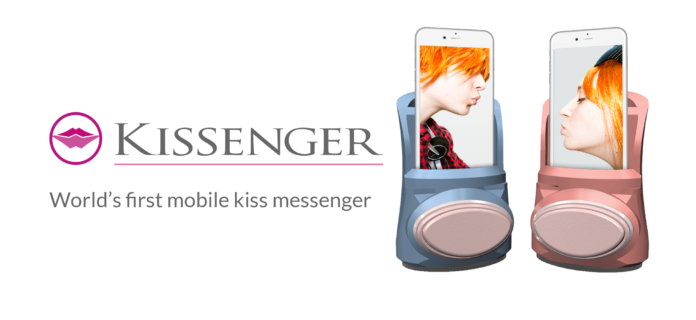
Kissenger, It is the world’s first mobile kiss messenger. If you are worrying about your long distance relationship, then it is only for you. This messenger will send your kisses to your lover. It works with pressure and actuators. It records the user’s kiss and transmits it to an identical receiving device, sends to the other end through the International calling app Miami FL that also features calling.
Kiss is an important segment to express our love, and physical touch plays an important role in the relationship. So it is not possible in long distance relations ships. By this kissenger you can plugin into the phone and give your loved ones a kiss over the internet.
Chanrge your Smartphone with Finger Swipe: Michigan University Researchers
This device will sense your kiss and transmit realistic kissing sensations to your partner in real time. After kissing, you can feel the force on your lips when your partners kiss back.
High precision sensors have embedded in the device under the silicon lip to measure the different parts of the lips during the kiss. After giving the kiss, it sends data in the form of kiss to your partner over the internet in real time.
Kissenger ios app is also available, after installing you can send kisses to your partner. These was designed by Adrian David Cheok, Emma Yann Zhang, Yukihiro Morisawa, Shogo Nishiguchi from Imagineering Lab, city university, London.
A Special Case that can transform iPhone into Android
Professor Zhang said “ kiss is an expression to express our love, it is also stress reducing when we involved in the kind of physical touch we have a lower level of blood pressure
To stay connected with your lover, friends, and family you can use this device. Kissenger is live now. They made the first working prototype for ios device is designed like a phone cover that plugs into the audio jack of iPhone or iPad.
A new device called the Kissenger makes it possible to give and receive a kiss through a smartphone — but it’s a bit early to start puckering up.
WASHINGTON — Long-distance relationships can be challenging, but a new device makes it possible to kiss someone over a smartphone.
Kissenger — no relationship to former Secretary of State Henry Kissinger — is in the working prototype stage, said Emma Yann Zhang, a doctoral student at the Imagineering Institute in Malaysia.
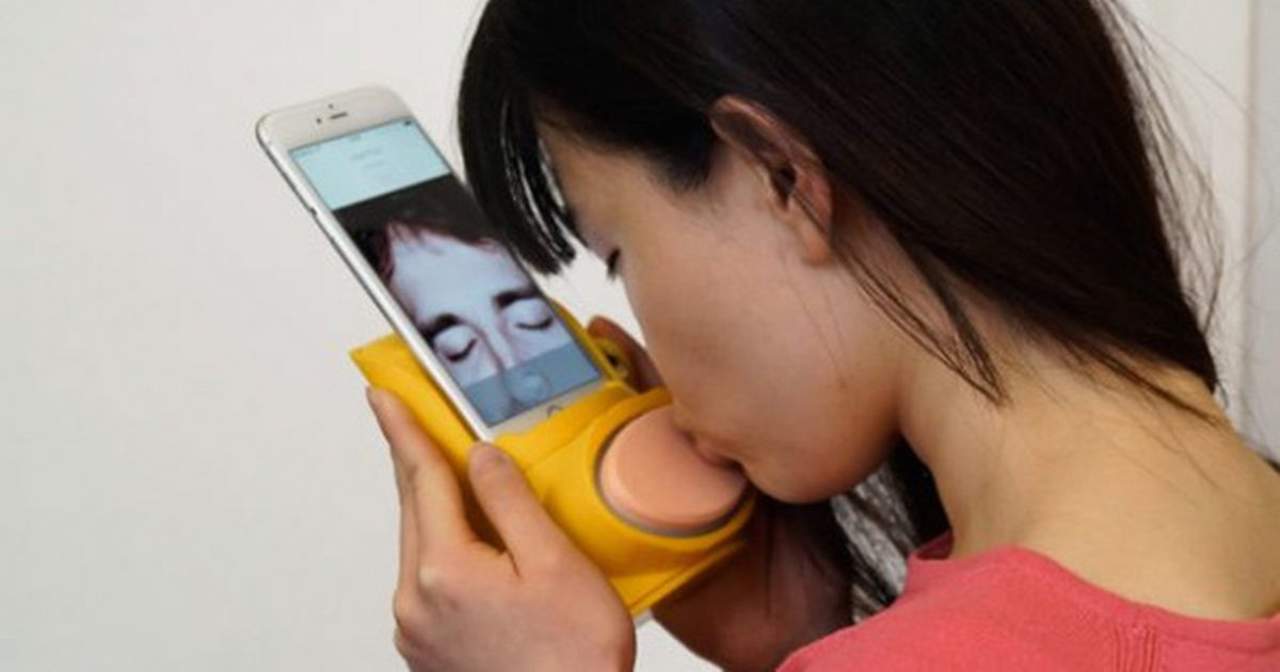
“It’s a device where you can plug into your phone, and it has an array of force sensors and actuators inside the device that can measure your lip pressure,” Zhang said.
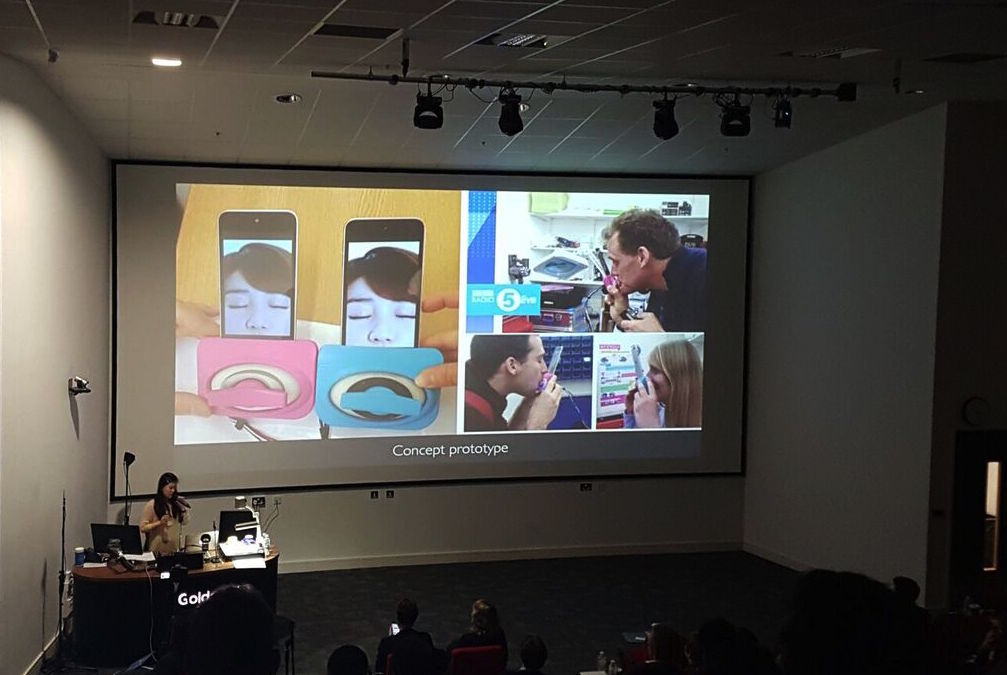
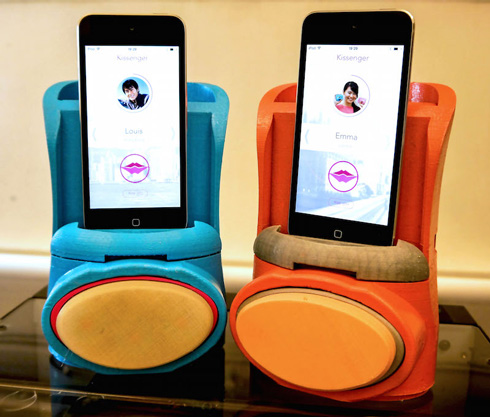
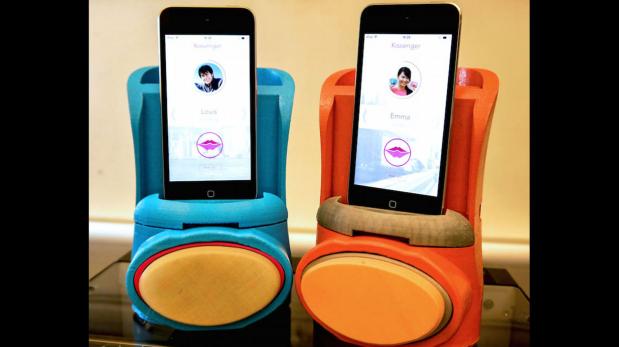
The prototype, made from a 3D printer, includes a holster which holds the phone and an oblong silicone pad.
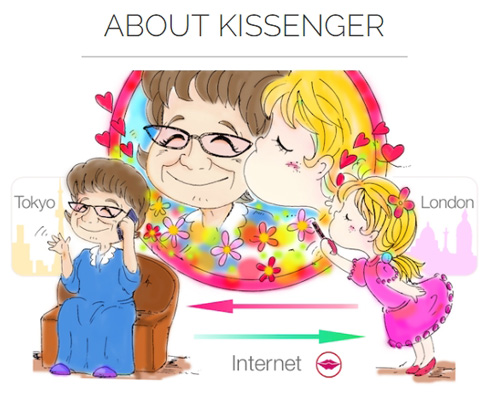
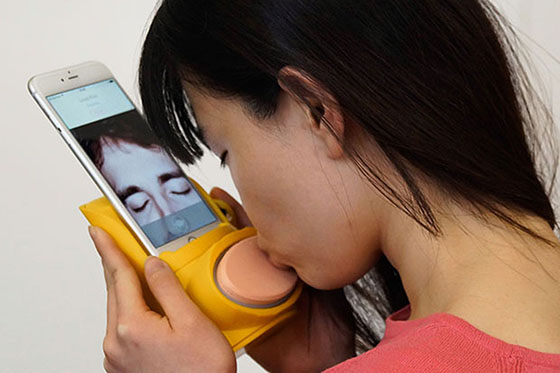
When exchanging a long-distance kiss, each participant can see the other through Skype video and feel the lip pressure being transmitted by the partner in real-time.
“We wanted material that is as close or similar to human skin, which is soft and flexible,” said Zhang.
Zhang developed the prototype and accompanying iPhone app for her doctoral research in conjunction with professor Adrian David Cheok, at City University London.
“We want to make online or digital communication much more intimate,” said Zhang. “We can see or hear each other, but we can’t really touch each other through the internet.”
Zhang said the physical touch is very important for human relationships, especially between lovers, and for parents and children.
“Some parents want to kiss their children or grandchildren when they’re not living together with them,” she said.
While interest in the concept has been high, Zhang said there are no current plans to commercialize Kissenger, although she would be open to working with companies willing to collaborate.
The quality of the kiss likely leaves something to be desired — it’s more of a peck on the lips, since there’s no tongue component.
And while Kissenger already has a sizable “ewww” factor — wait, there’s more.
“Now we’re looking at making the resolution of this device higher, with more sensors and actuators to provide a more realistic kissing sensation,” including your partner’s scent, said Zhang.
“The next version we’re looking at building a kissing robot,” said Zhang. “It’s going to be a humanoid robot head, but with interactive lips.”
Ewwwww More to come.
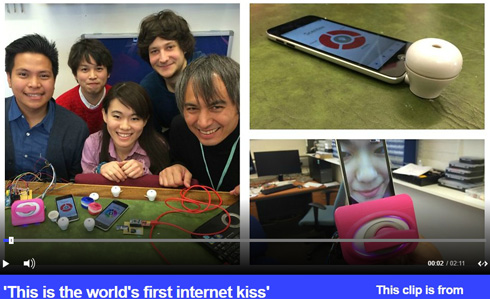
Emma Yann Zhang and Adrian David Cheok demonstrate how Kissenger works:
Bientôt, fera-t-on faire l’amour à des androïdes ?
TECHNO – Avoir des relations sexuelles avec des robots “c’est pour demain”, a prédit un chercheur en intelligence artificielle lors d’une conférence consacrée aux jouets sexuels interactifs et aux relations avec les humanoïdes, organisée à Londres les 19 et 20 décembre.
Si le cinéma et la télévision, avec récemment par exemple “Ex Machina” et “Westworld“, ont largement exploré l’idée des androïdes comme objets de séduction, les robots sexuels restent pour l’instant du domaine de la science fiction.
Cela devrait changer rapidement, prédit toutefois le spécialiste David Levy, “avec l’arrivée des premiers robots sexuels quelque part l’an prochain”.
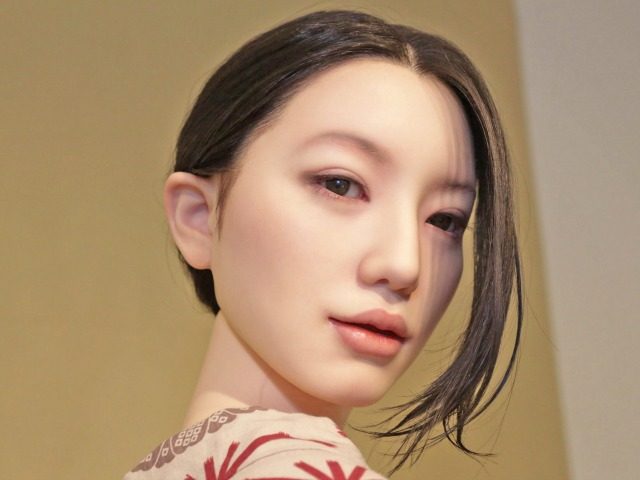
L’entreprise californienne Abyss Creations a en effet annoncé vouloir mettre sur le marché dès 2017 des robots sexuels qui présentent toutes les apparences de l’humain. La société propose déjà des “poupées sexuelles” grandeur nature depuis des années, mais va maintenant leur donner la parole. Elles pourront discuter avec une personne, lui demander comment s’est passée sa journée, etc.
Le sexe à distance
En attendant, les dernières trouvailles en matière de jouets sexuels électroniques ont été présentées lors de la conférence organisée par l’université Goldsmiths de Londres, comme cette application mobile permettant aux couples d’échanger des baisers à distance et baptisée “Kissenger”.
Une autre application qui propose d’échanger des bruits et sensations de léchage, “Teletongue”, est en cours de développement à l’université Keio de Tokyo. Encore plus loin et plus bizarre, le site BlowCast propose des fellations via internet, en enregistrant d’un côté les sensations et en les retransmettant de l’autre, avec des sextoys connectés.
Lynne Hall, du département de sciences informatiques de l’université britannique de Sunderland, estime que les robots pourraient créer “une expérience sexuelle fantastique”. “Il y a plein d’avantages au sexe avec les robots… C’est sûr, vous n’attrapez pas de maladie, vous pouvez contrôler”, a-t-elle mis en avant. Et selon elle, il n’y aucun risque de le voir supplanter le sexe entre humains.
Les mariages avec des robots pour 2050?
“On nous inculque une sorte de panique morale… ‘c’est dégoûtant… personne ne fera plus l’amour avec un humain'”, dit-elle. “Mais les gens regardent régulièrement du porno et continuent pourtant de faire l’amour avec des êtres humains.”
David Levy, auteur en 2007 du livre “Love and Sex with robots”, qui a donné son nom au symposium londonien, va plus loin et estime que l’homme pourrait aussi envisager d’épouser des robots dès le milieu du siècle.
Les robots du futur seront “patients, gentils, protecteurs, aimants”, jamais “jaloux, vantards, arrogants, brutaux”, a affirmé David Levy, par ailleurs champion international d’échecs britannique. “A moins évidemment que vous ne le souhaitiez”.
Selon sa vision, des parents robots pourraient devenir une norme sociale, avec des lois promouvant “l’identité robot”. “Le temps viendra où le débat théorique devra évoluer en loi et les conséquences de ces lois seront stupéfiantes”, présage-t-il.
Pour le moment cependant, envisager des relations sexuelles avec un humanoïde va trop loin pour beaucoup de monde, souligne Emma Yann Zhang, une étudiante de City University de Londres qui a travaillé sur le prototype “Kissenger”.
Une étude menée par l’Institut d’imagerie de Malaisie, en collaboration avec la City University, montre en effet que si les gens sont ouverts à la possibilité que des humains puissent être attirés par des robots, la plupart n’envisagent aucunement de prendre un robot pour amant, a-t-elle souligné.
Ein Smartphoneaufsatz verspricht räumlich getrennten Paaren sinnliche Kusserlebnisse auf Distanz. Dabei zerstört der »Kissenger« eher den Charme einer Fernbeziehung, findet unsere Autorin. Hilfreich wäre er dagegen für Eltern von Teenagern.
»Ein Kuss ist der Vulkan des Herzens«, sagte der deutsche Lyriker Christian Friedrich Hebbel und wenn das stimmt, dann wogt ganz Deutschland auf einer Welle glühend heißer Liebeslava, denn angeblich küssen sich deutsche Paare etwa fünfmal am Tag. Das jedenfalls gaben 34 Prozent der Befragten einer Umfrage des Meinungsforschungsinstituts Yougov an. Besonders häufig küssen sich demnach Paare ohne Trauschein, wohingegen mit der Ehe sowie zunehmendem Alter die Kussfrequenz eher abnimmt, jedoch nie unter die »Zwei-Küsse-pro-Tag«-Marke fällt.
Dabei ist gerade in Langzeitbeziehungen, auch das belegen Studien, regelmäßiges Küssen eng gekoppelt an der Grad der Beziehungszufriedenheit, enger sogar noch als Sex. Ein Problem, dass vor allem Paare in Fernbeziehungen umtreibt, denn Sex kann man zur Not noch mit sich selbst haben – küssen jedoch kann man bekanntlich nicht allein. Nun will ein neues Smartphonegadget diesen Paaren zu intimen Kussmomenten verhelfen: Der Kissenger, ein Kompositum aus Kiss und Messenger, vorgestellt auf einer Messe in London zum Thema »Liebe und Sex mit Robottern«, ist eine Art Smartphonehülle mit integriertem Kuss-Screen. Küsst man ihn überträgt er den Druck der Lippen dann auf den Kissenger-Kuss-Screen des Partners.
Man könnte das für eine alberne kleine Spielerei halten, einen niederschwelligen Zugang zu Virtual-Reality-Sex, der ja seit Jahren als das nächste große Ding angekündigt wird, und noch ist fraglich, ob der Kissenger wirklich in Serie geht. Man könnte in ihm jedoch auch ein Symbol sehen für die Banalisierung des Kusses, beziehungsweise für mangelnde Definitionsschärfe, wenn es um die Frage geht, ab wann man das Aufeinanderpressen von zwei Mündern als Kuss bezeichnen kann. Denn wenn das, was der Kissenger kann, irgendetwas mit einem echten Kuss zu tun haben soll, vielleicht nicht das Selbe aber doch immerhin nah dran, dann ist nach dieser Logik der Gebrauch einer elektrischen Zahnbürste nah dran am Blowjob, das Überstreifen eines T-Shirts nah dran an einer zärtlichen Berührung, Fahrradfahren über Kopfsteinpflaster nah dran an leidenschaftlicher Kopulation, gemeinsames Anstehen am Stadionwurststand nah dran am Gruppensex.
Tatsächlich könnte der Gebrauch des Kissengers Paaren genau das verleiden, was einen der wenigen Vorteile einer Fernbeziehung ausmacht: Sich noch wirklich mit jeder Faser seines Körpers nach dem anderen sehnen zu können. Dieses Sehnen quasi wie eine Magmablase in sich wachsen und brodeln zu lassen, um es dann – wenn man sich endlich wiedersieht – zu einem Kuss kommen zu lassen, der eben wirklich ein Vulkanausbruch des Herzens ist, so wie Hebbel ihn beschreibt. Das sicherste Zeichen für eine langsam einschlafende Beziehung ist nämlich nicht die abnehmende Kusshäufigkeit, wie die eingangs zitierte Umfrage suggeriert, sondern einzig und allein der Grad der Bussifizierung. Wenn ein Paar sich fünfmal am Tag ein Bussi auf die Lippen schmatzt, egal ob real oder virtuell, ist es damit sicherlich noch lang nicht glücklicher miteinander als ein Paar, das einmal in der Woche einen wirklich intimen Moment miteinander teilt und sich innig und mit Hingabe küsst.
Der Kissenger ist also völlig ungeeignet, um räumlich getrennten Paaren ein Gefühl von Verbundenheit und Nähe zu geben. Vielleicht sollten die Hersteller einfach die Zielgruppe überdenken: Marktpotential hätte der Kissenger sicherlich für Eltern pubertierender Kinder, die so einen für beide Seiten akzeptablen Weg finden könnten, auch weiterhin an ihrem Nachwuchs herumzubusseln.
Long-distance relationships are difficult because not only is your lover completely removed from your day-to-day life, but you have absolutely zero possibility of tangible physical intimacy. This is sad. Researchers from the Imagineering Lab at City University London think they can solve this problem, however, with their new Kissenger gadget. The device mimics a real kiss using pressure sensors and actuators. It’s purely for regular pecks on the cheek or mouth — no tongue simulation is available. Sorry.
The Kissenger pairs with a messaging app that lets a user send a kiss, so when one is sent, the Kissenger measures pressure on different parts of the sender’s lips to replicate that exact kiss on the recipient’s Kissenger. The lip part of the device is made of silicon. I don’t think it would feel as nice as a regular kiss, but hey, who knows. Maybe a cold silicon device pushing against your lips would feel good if you knew it came from a loving place.
So far, the team has created a functioning iOS prototype that plugs into a device’s headphone jack. This is clearly not future-proof as the iPhone 7 doesn’t even have a headphone jack. But okay still, maybe one day the Kissenger will let you kiss your lover, or your mom, or even your favorite celebrity. That’s a nice thought at least.
Attendees of the Second International Congress on Love and Sex with Robots were treated to some innovative tech that promises to connect people in very intimate ways. This is not about teledildonics though, but about rather more safe-for-work interactions of an oral nature—namely kissing and licking.
Technology allows us to interact with our family, friends, and lovers over a distance like never before. We can see and hear them in real time, constantly exchanging messages and information. But the importance of physical interaction to the quality of these relationships is still grossly underestimated.
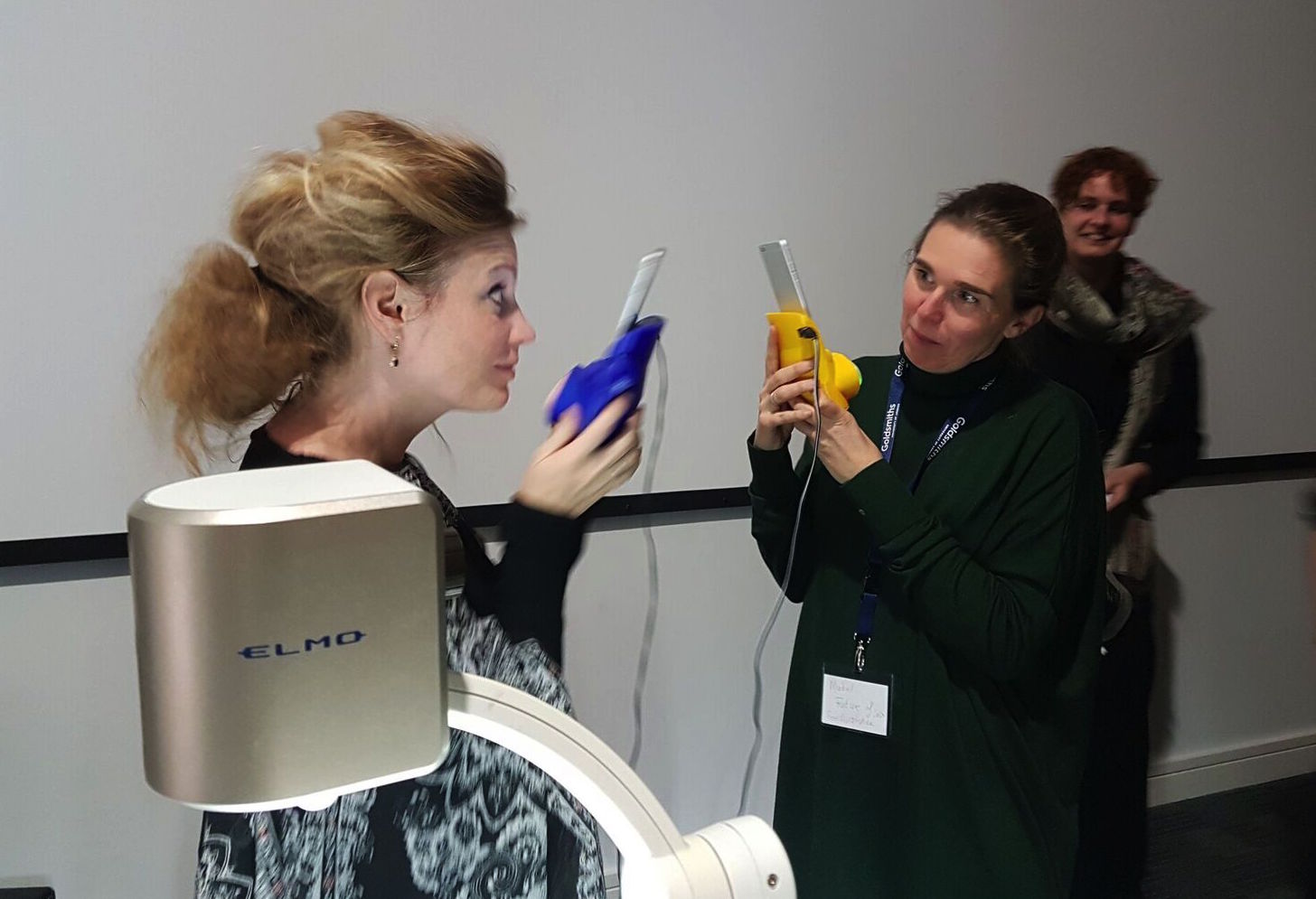
“Making regular physical contact is essential for maintaining closeness and intimacy in human relationships,” explained Emma Yann Zhang, a Postgraduate Researcher at City University London. She demonstrated her prototype Kissenger device to an enthralled audience at the conference. “Haptic communication is very effective in conveying one’s feelings and emotions as well as evoking a sense of presence in a remote environment.”
Described as a “Real-time Internet Kiss Communication Interface for mobile devices,” Kissenger transmits multi-sensory kissing sensations over the Internet. It works by using a plugin, haptic device that attaches to your mobile phone via its audio jack, producing bilateral force feedback in the form of both pressure and vibration.
“The dynamics of the movements and pressure felt by the human lips during kissing cannot be accurately reproduced by vibrations alone,” Zhang said. The haptic device needs to generate a series of localized forces in order to capture the haptic sensations during kissing.
To achieve this, her team designed an array of linear actuators positioned evenly across the lips to generate normal forces on the skin surface. The same number of force sensors resistors are placed on top of the actuators to measure the contact forces between the human user and the haptic interface. The design works like a phone case to make more space at the back of the phone for those sensors and actuators.
Image sources: Alice Bonasio, Daisuke Yukita
The power of a kiss
“Kissing is the most direct and effective way of sharing an intimate moment and Internet communications should allow people to connect to each other through this form of interaction. Studies have shown that a higher frequency of romantic kissing between couples increases romantic satisfaction and reduces stress levels,” Zhang said. She added that even people who would consider certain types of kissing inappropriate were OK with the electronically mediated sort and found the experience interesting.
I watched as Anna Malinowska from the University of Silesia in Poland shared a Kissenger moment with Clinical Sexologist Chloé De Bie. Malinowska said that she indeed felt a real sense of connection to her partner, even though they’d never actually touched.
It is interesting to see how such devices, even in a public environment, can engender a sense of intimacy and interconnectedness, and how this can be done in a non-sexual way as well. The aim, according to Zhang, is to provide an intimate communication channel not only for couples, but for families to physically interact over a distance.
Parents could use Kissenger to give their children a kiss on the cheek when they are away at work, for example. It could also be used for both one-to-one communication and one-to-many communication (another potential use-case cited by Zhang is of a pop star blowing fans a collective kiss, which each person could experience on their device).
A multi-sensory smooch
The Kissenger team is now investigating the possibility of incorporating the scent communication device, Scentee. It would emit the perfume or a distinctive scent associated with the user’s partner to create a multi-sensory experience. Smell is an important factor that directly affects our emotional responses to a kiss. When two people are kissing, they are close enough to detect a class of genes present in body odor called MHCs, which determine our sexual preference and compatibility to a person.
Zhang said she believes that emitting a partner’s body odor during kissing helps to create not only a stronger sense of physical presence but also strengthens affection. The next step will involve incorporating other sensory modalities, taste and smell as well as temperature and moisture, to provide a full multi-sensory communication experience.
Teletongue
But for users who want to go a beyond kissing, Daisuke Yukita might have the answer. He’s been working with his colleagues Fathima Assilmia, Nadira Anndhini, and Dolhathai Kaewsermwong at Keio University in Japan to design lollipops that give a whole new meaning to “tickling your tastebuds.”
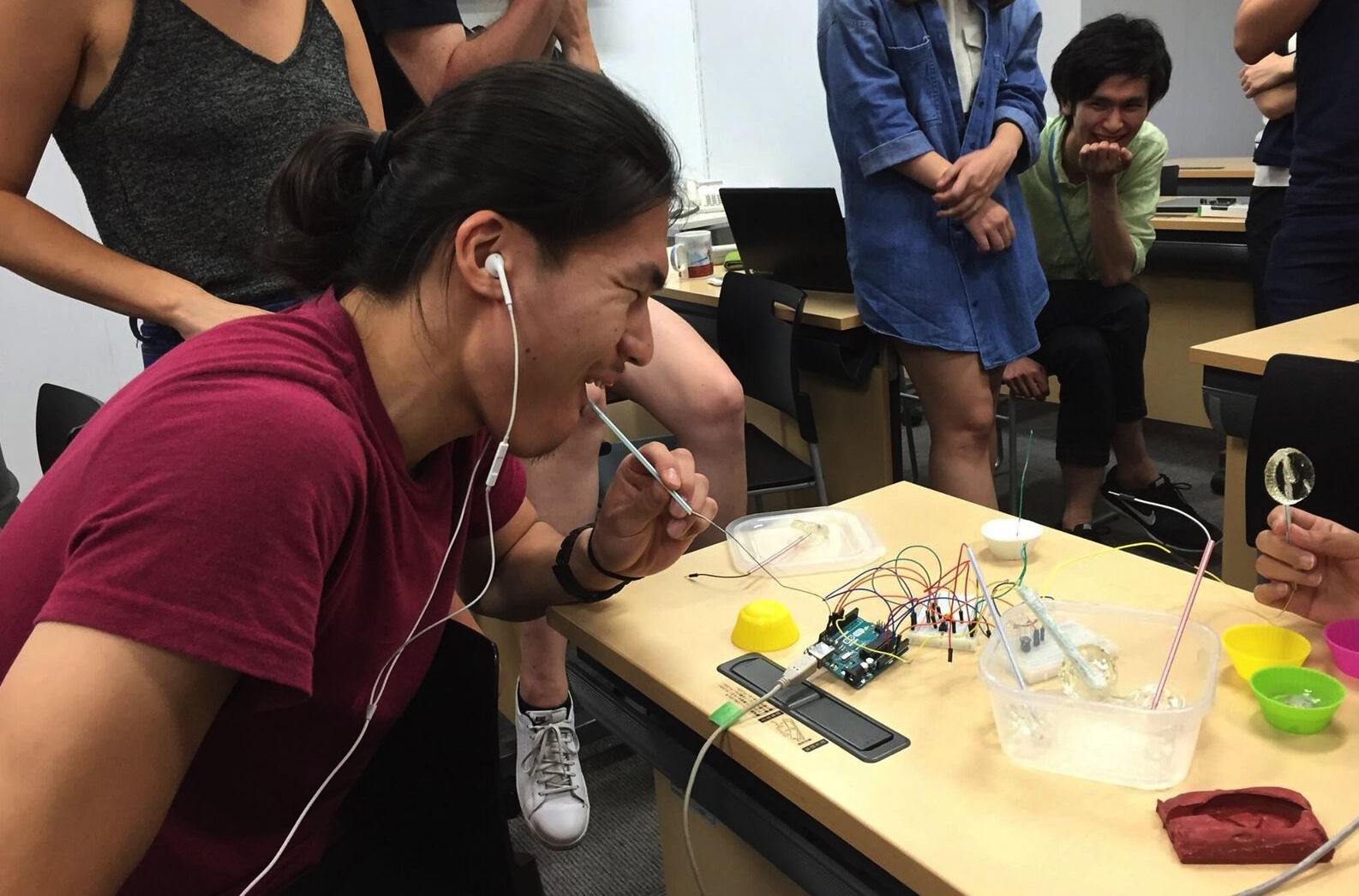
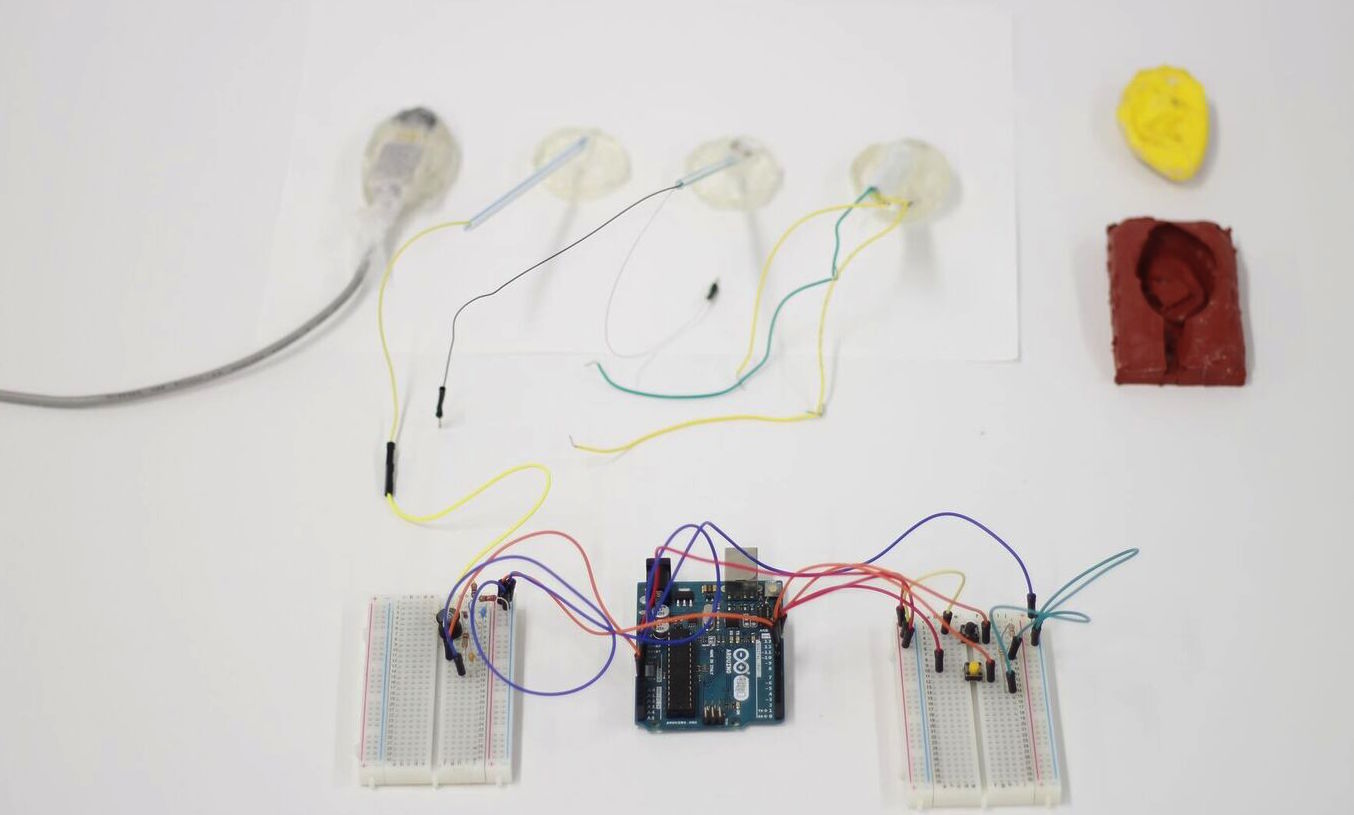
Teletongue is a device that enables remote oral interaction between two people. One Lollipop senses the licking gestures and sound of the user, while the other one vibrates according to the gestures and playback of the recorded sound.
Developers started off with incorporating a microphone into the lollipop to enable them to listen to the user’s licking movements. It seemed to make sense, therefore, to make said lollipop into the shape of an ear. “We modeled a human ear with 3D modeling software Maya, which we then 3D printed,” Yukita said.
The current version of the Teletongue system consists of a pair of those ear-shaped lollipops (which are not only edible but also tasty, according to Yukita) connected to an Arduino microcontroller. The microcontroller processes the sensed data from one lollipop (collected through a USB microphone that records the licking sounds and a Touché sensor to sense the gestures).
It then outputs the processed values into the other. The device is even able to distinguish a normal lick (without the lollipop entering the user’s mouth), from a full lick (the lollipop entirely inside the user’s mouth). The output lollipop contains a vibrator, which vibrates lightly with a light lick, or more strongly with a full lick.
“There are many teledildonic devices designed to support intimate connections, but this is meant to provide a more natural way of enjoying intimate relationships that blends seamlessly into everyday life.” The aim, said Yukita, is to create a device couples feel comfortable using in public.
“We focused on the act of kissing and licking, which many have no problem doing outside of their home. For it to be a normal, everyday device, it also needed to be an object that everyone is familiar with and something that people have no problem putting into their mouth. We believe that using commonly known forms such as a lollipop will decrease people’s reluctance in putting an electronic device into their body, in this case, their mouth.”
It’s still a work in progress, in that it doesn’t yet work in real time like Kissenger does. But the team is working to use the ZigBee protocol to incorporate that in future and connect the two lollipops remotely via the Internet so users can enjoy Teletongue simultaneously.
“We’re soon going to move on to testing on real life couples,” Yukita said. “We hope that Teletongue will be the first step to a more open and casual usage of sex toys and teledildonics, one that is not embarrassing, but comforting and bonding.”




















/cdn1.vox-cdn.com/uploads/chorus_image/image/52495985/Mjg0NjM0NQ.0.jpeg)