
EL PAÍS Interview – La ciencia y la gastronomía comen en la misma mesa

posted in: Media

El_Pais_logo

San Sebastián 10 MAR 2015 – 19:06 CET

Las jornadas Diálogos de Cocina ahondan en San Sebastián sobre el potencial de la tecnología en los fogones
elpais_photo
El científico Adrian Cheok, en un debate de Diálogos de Cocina, junto al chef Paco Morales.

“Precisión, textura”, “La tecnología en la mesa te puede desconectar de la experiencia en sí”, “La tecnología es una herramienta más”, “El alma no anida en la tecnología”, “No nos podemos olvidar de lo importante, es decir, de lo que comemos”, “Es necesaria, no hay evolución sin tecnología”, “La tecnología siempre es necesaria, pero también me gusta escuchar la música en vinilo”. Las reflexiones, recopiladas por el cocinero Mario Sandoval, corresponden a otros tantos chefs sobre la relación de la tecnología y la gastronomía o de lo que las primeras pueden aportar a la segunda.

La quinta edición de las jornadas Diálogos de Cocina, que reúne entre ayer y hoy en San Sebastián a cocineros, diseñadores, ingenieros y periodistas, entre otros, bucea, en una parte de su programa, sobre el potencial de la tecnología y la ciencia en la gastronomía. También, sobre las dudas y los recelos de mezclar ambos campos.
Elpais_photo2
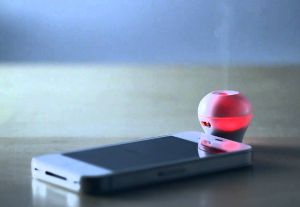
Teléfono inteligente que permite oler aromas de comida.

Precisamente, Sandoval, ha detallado, en una mesa redonda junto al investigador Adrian Cheok, el chef Paco Morales, y Javier Portolés, de la empresa Inhedit, como ha desarrollado una patente junto al CSIC para la hidrólisis del huevo, que permite reproducir diferentes texturas. La patente fue vendida a una empresa estadounidense y llegará a Europa el próximo año.

Sandoval, quien ha impulsado varios trabajos con el CSIC, ha explicado que lo que le animó a ponerse en contacto con investigadores fue la labor previa que había desarrollado en este terreno Andoni Luis Aduriz, chef de Mugaritz, impulsor de Diálogos de Cocina, junto a Azti Tecnalia, una empresa vasca de investigación. En definitiva, de acercarse a un mundo, el científico, que aunque a priori parezca completamente alejado de la gastronomía puede aportar mucho a esta y viceversa. “Realmente la patente ya la tenía un investigador en su cajón”, ha apuntado Sandoval, pero la clave resultó aplicar la técnica al huevo.

“Nos queda mucho por avanzar, un camino enrome por descubrir”, ha añadido Sandoval, tras la intervención de Paco Morales, que ha comenzado a introducir las impresoras 3D en su cocina. El cocinero de Noor ha detallado que la tecnología forma parte de su quehacer diario desde hace cinco años. “Nos da mucho miedo aplicar la tecnología”, ha precisado, pero ello no impide que experimente en su cocina con la impresión de alimentos, una técnica, que de momento, está desarrollando entre bambalinas, pero sobre la que no ha dudado en asegurar que algún día, quizás, “se aplicará como la Thermomix. Hace 30 años la gente se llevaba las manos a la cabeza con un microondas, y ahora es normal”.

Elpais_photo3
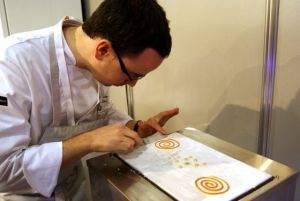
El cocinero Paco Morales, con alimentos de una impresora 3D. / A.FERNÁNDEZ GUTIÉRREZ

“Un chef no solo compra alimentos, crea experiencias, y lo digital se une a lo analógico, es un maridaje habitual el del científico y el chef, el de empujar las fronteras”, ha defendido el ingeniero australiano Adrian Cheok, responsable, entre otras cosas, de un proyecto para la transmisión de olores y sabores electrónicamente.

“La incertidumbre de entrar en terrenos que se desconocen. Muchas veces no sé a dónde voy, pero lo que debemos saber es donde no queremos estar”, ha resaltado Aduriz, que trabaja junto a Cheok. “El proceso de trabajo con alguien creativo tienta desde el alma porque independientemente del resultado, en el proceso va a haber un aprendizaje”.


http://elpais.com/elpais/2015/03/10/estilo/1426010814_194594.html

Science Museum Exhibition – Cravings: Can your food control you?

posted in: Media, Research

sciencemusuem_logo

Find out how the food you eat affects your body, brain and eating-habits. See our electric taste interface exhibited in the Cravings exhibition at London’s Science Museum! Free Entry.

Screenshot 2015-03-14 16.42.10

What drives your desires for the foods you love? Is it the colour of your spoon, the food your mum ate while pregnant, the trillions of bacteria that dine with you, or the little known ‘second brain’ in your gut?

From the flavours you learned to love in the womb, to the very next bite you take, your appetite has been shaped by food. Through personal stories, fascinating objects and cutting-edge science and technology, explore how food affects your body, brain and eating habits.

Visit Cravings in our Antenna gallery to:

  • See an artificial gut whirring away.
  • Take part in a real experiment on flavour perception.
  • Touch some 3D-printed mice, sniff a scientific smell kit, and ‘chew’ some ‘bread’ in our interactive displays.
  • Play Craving Commander and express your opinion on how we can get raging cravings under control. Should we ban cake except on birthdays? Use smart refrigerators that police what we eat? You decide in this fast-paced game.
  • Discover unconventional dining utensils designed by scientists and chefs to trick our sense of taste.
  • Find out if scientists think we ‘eat with our eyes’ and if we can be ‘addicted’ to food.


http://www.sciencemuseum.org.uk/visitmuseum/Plan_your_visit/exhibitions/cravings.aspx

Interview in daily BERRIA, The Basque Country

posted in: Media

2015-03-11 / Edu Lartzanguren

Jana konposatu eta inprimatuko dugu

p040_f01
Etorkizuneko janaz eta janaren etorkizunaz mintzatu da ‘gerologo’ australiarra Basque Culinary Centerren. Zapore sintetizadoreekin, inoiz probatu gabekoak dastatuko ditu aurki gizakiak, dioenez.

Gailuen eta gizakien arteko harremanen guru bat da Adrian David Cheok (Adelaide, Australia, 1971). Nonahiko Informatika irakasten du Londresko City Unibertsitatean, hau da, gizakiek ordenagailuekin zelako harremana izango duten makinok bizitzako zokorik bazterrenetara ere heltzen direnean. Sukaldaritzaz mintzatu da Basque Culinary Centerren, Donostian, Sukaldeko solasaldiak ekitaldian.

Internet bidez, zaporeak eta usainak zabaltzeko garatu dituzun gailuak erakutsi dituzu. Ziur zaude jendeak gauzak usaindu nahi dituela Internetez edo telefonoz?

Jendeak ikusten du gero eta gehiago komunikatzen garela Internet bidez, baina konturatzen dira oraindik oso zaila dela zure benetako bizipenak eta emozioak komunikatzea. Laster, bost zentzumenak erabiliko ditugu Internet bidez: elkar besarkatuko dugu, ukituko, usainduko. Elkarrekin bazkaldu ahalko dugu Internet bidez. Telepresentzia mota berria izango da. Gure ikerketen arabera, jendeak erreakzio positiboagoa du, telefonoan, irudiaz gain, ikusten duenaren usaina jasotzen duenean. Gaur, janaren irudiak dira bigarren kategoria nagusia Instagramen. Zaporea eta usaina bidaltzerik dutenean, sekulako merkatua egongo da hor.

Duela 30 urte 2015. urterako norberak bere helikopteroa izango zuela esaten zuten. Ez al zaio berdin gertatuko zuk iragarri duzun etorkizunari?

Gustu sorgailu elektronikoa hemen dago. Prototipoa da, baina primeran dabil. Zure mingaineko gustu hargailuak zuzenean kitzikatzen ditu, eta gozoa zein gazia burmuinean sortzen dizkizu, gai kimikorik gabe, digitalki. Zaporeak bidal ditzakezu Internetez, gaur musika eta irudiak bidaltzen dituzun bezala. Era berean, usaimena zuzenean kitzikatzeko eremu magnetikoak erabili nahi ditugu. Japonian eta AEBetan salgai daude jada usain mezuak bidaltzeko gailu hauek [telefonoan bidali usaina tekla sakatu du, eta lore usaina zabaldu da]. Oskar Mayer haragi etxearekin iratzargailu hau egin genuen: hirugiharrak zartaginean frijitzean egiten duen zaratarekin eta botatzen duen usainarekin esnatzen zaitu [sakatu du: hirugihar lurrina hedatu da].

Zure familiak zerikusia du garatzen ari zaren teknologiarekin?

Bai. Erdi malaysiarra naiz eta erdi greziarra. Familia dut Malaysian, Grezian eta Australian. Ezinezkoa zait denekin fisikoki elkartzea, baina, honekin, Gabonetako afari birtual bat izan ahalko dugu, eta janaren usaina zein gustua partekatu munduan sakabanatuta egonda ere. Interneten hurrengo fasean, bizipenak partekatzea izango da garrantzitsuena.

Gaur musikarako sintetizadoreak dauden bezala, jana edo zaporeak digitalki sortuko direla diozu. Baina benetan jan ahalko ditugu?

Bai. CDak sortu zituztenean jendeak uste zuen Beethovenen 9. Sinfonia orkestra etxean balego bezala entzuteko zela bakarrik. Baina, musika digital egin zenean, konposatzeko modua bera ere aldatu egin zen, eta genero berriak sortu ziren. Gustua eta usaina digitalizatzen ditugunean, jendeak hasieran esango du: «Hara, txokolate tarta baten zaporea bidali ahalko dut». Baina benetako iraultza izango da hasiko garela bestelako jana programatzen eta 3D inprimagailu batekin inprimatzen. Gustu berriak izango dira, orain usaindu ere egiten ez ditugunak. Jana konposatu, inprimatu eta Internetez banatuko dugu laster.

Malaysiara joango zara. Errazago onartzen dituzte teknologia berri hauek Asian Europan baino?

Ikerketa institutu bat eratuko dut han, Interneten geroa imajinatzeaz gain, benetako gailuak sortzeko. Europa zoragarria da sorkuntzarako, Pizkundetik dabilelako mugak hautsi nahian. Asia tradizionalagoa da, baina oso ongi onartzen ditu robotak, budismoan edozein gauzak duelako arima. Europa eta Asia lankidetzan hasten badira, oso ideia sendoak eta berriak sortuko dira.

http://www.berria.eus/paperekoa/1845/040/001/2015-03-11/jana_konposatu_eta_inprimatuko_dugu.htm

The future of extreme thrills – Guardian

posted in: Media

titlepiece

Nicola Davis, Monday 9 March 2015

Why are humans attracted to intense, thrilling experiences that expose us to danger?

Nicola Davis is joined by Professor Adrian David Cheok of City University London. He’s the founder of the Mixed Reality Lab in Singapore. Also in the studio isProfessor Brendan Walker, the artist-engineer behind Neurosis, a mixed-reality thrill ride which will be shown at FutureFest, a weekend of immersive experiences, performances and speakers designed to excite and challenge perceptions of the future. Joining them is the journalist Kit Buchan, who recently tried out Brendan’s Neurosis ride.

Can virtual experiences provoke the same responses as real ones? Where is science and technology taking us next in our search for strange and extreme thrills? And should we be wary of the physical and psychological consequences of virtual reality?

http://www.theguardian.com/science/audio/2015/mar/09/futurefest-virtual-reality-extreme-thrills

Share touch, smell and taste via the internet

posted in: Media

euronews-logo

The smell of freshly cut lavender – like so many fragrances, it has the power to conjure up a whole set of memories and feelings – imagine being able to share that with someone on the other side of the earth.

Sharing smell, but also touch, and even taste – that’s the vision of a London university professor who has developed a range of devices he hopes will transcend the current limitations of online communication.

Today, our interaction with a smartphone or a computer is essentially audio-visual. Adrian David Cheok, Professor of Pervasive Computing at City University London, wants to involve all of our senses.

“Imagine you’re looking at your desktop, or your iPhone or laptop – everything is behind the glass, behind a window, you’re either touching glass or looking through glass. But in the real world, we can open up the glass, open the window and we can touch, we can taste, we can smell. So, what we need to do is we need to bring computers – the way we interact with computers – like we do in the physical world, with all of our five senses,” says Professor Cheok.

To communicate smells via the internet, Cheok and his team have created the “Scentee” device, which connects to an app on your smartphone. An aroma is released when you receive a text message or when the phone clock alarm goes off.

“Scentee is a small device than you can attach into your mobile phone, into the audio jack. And what happens is that it allows you to send a smell message through your mobile phone. So, for example, it could be someone’s birthday and you can send them the smell of strawberry,” explains Professor Cheok.

Fragrances include florals like lavender and rose, fruit like strawberries or invigorating aromas like coffee.

One device plus 3 aroma cartridges will set you back some US$70 or around 60 euros. Each replaceable cartridge contains around 100 sprays. Its developers say the technology can also be used in tandem with a smart phone alarm clock to fill a room with an aroma and influence a person’s mood.

But Cheok wants to go further, beyond smell, and offer users a chance to share touch via the internet. So, together with a team of researchers in Japan, he has developed what’s been dubbed the “world’s first tele-hug ring”.

“With this device here – it’s called RingU and you can put it on your finger – it connects to your smartphone so you can connect to anyone in the world through the internet. So I can be in London and my friend can be in Tokyo, and I can squeeze my finger and then they’ll get a squeeze on their finger through the internet. It’s a way of touch communication with small mobile devices,” says Professor Cheok.

When one user “hugs” the ring, the touch sense is digitally transmitted to the recipient’s ring which then replicates the sensation. The ring communicates with your smartphone using Bluetooth technology. It can even display the date, time and location so-called “hugs” were sent and received.

Moving on to taste now, and Cheok’s most surprising invention: the “Electronic Taste Machine”. Wedged between two metal sensors, your tongue is tricked into experiencing various tastes, ranging from sour to bitter, salt or sweet, depending on the frequency of the electrical current passing through the electrodes.

And like with the other devices, these electrical signals can travel through the Internet.

“We’ve researched and found certain frequencies and amplitude of electrical current can generate artificial taste,” explains Professor Cheok. “So, basically what happens is you put these two silver electrodes in your mouth, you put your tongue in between and then it stimulates electrically your tongue and you get a virtual taste perception in your brain.”

Cheok is the founder of Singapore’s “Mixed Reality Lab”.

In mixed reality, the real and virtual worlds will eventually merge as one, to produce new environments where physical and digital objects will co-exist and interact in real time.

Copyright © 2015 euronews

http://www.euronews.com/2015/02/02/share-touch-smell-and-taste-via-the-internet/

Smarter phones that smell, taste and feel great that smell, taste and feel great

posted in: Media

380-63

Imagine an Apple iPhone that smells like an apple or a Blackberry that taste sweet or a Windows Touch-phone that squeezes you in mid-conversation. Scientists in London have made more progress in the now-common smartphone to make the audio-visual communication transcend tool what engineers call “the glass barrier” and create an experience that is more 4-D.

Professor Adrian David Cheok of the University of London said of his technology, “In the real world, we can open up the glass, open the window. We can touch, we can taste, we can smell in the real world.”

How do inanimate smartphones deliver the sensation of senses?

First you will have to open your mouth and say, “Ah!” The human tongue’s surface has molecules, also known as tastebuds, that through chemical ionization send the brain electrical signals of a specific amplitude depending on which type of taste: sour, sweet, salty, and bitter. Scientist have found a way to send these signals — minus the calories — to savor. This process was explained by Professor Cheok.

Smartphones

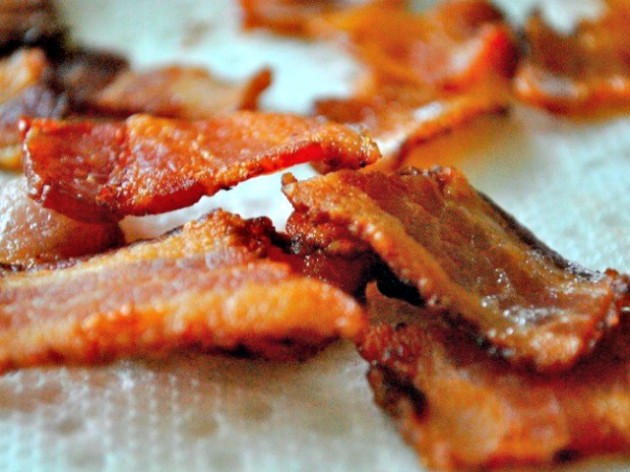
“You put these two silver electrodes in your mouth, you put your tongue in between and then it stimulates electrically your tongue and you get a virtual taste perception in your brain.” So far, scientists have reproduced sour, salty, sweet and bitter tastes, it will take further exploration to make all the taste we are accustomed to eat like Bacon.

At the push of a button you are now able to deliver an array of scents to smell. The device and app “Scentee” is an attachment to plug into your smart phone that holds a cartridge of 100 different smells, from fresh fruits, lavender or jasmine, to fresh ground coffee, that can be sprayed when prompted by the other side of the conversation. Professor Cheok relayed, “Basically what happens, we have an app, it connects to the Internet and then this will release scent from your mobile phone.” Think of the added benefit of sending your friend a hint of lemon scent when they say they are having a bad day or the scent of cookies because you know they are not hungry when you are.

Have you even been in a conversation and the other person for a moment stops paying attention or loses focus? Well, as long as you put a ring on them that is connected wirelessly to your smartphone, you can gently squeeze their finger to regain their attention or focus in mid-conversation. “I can be in London and my friend can be in Tokyo, and I can squeeze my finger and then they’ll get a squeeze on their finger through the Internet. It’s a way of touch communication with small mobile devices,” said Professor Cheok.

With the development of smart technology, from phones to homes, the barriers of pan-sensual communication will soon be memories of the past. Professor Cheok hopes the devices developed will soon be added to smartphone and homes to further transcend the current limitations of long distance communication.

By Mark A.G. Cox

http://thespeaker.co/smartphones-smell-taste-feel-great/

Smartphones About to Make Leap, Carry Basic Senses

posted in: Media
VoiceOfAmerica-Logo
George Putic

Long-distance communication contains mostly sounds and pictures. For now. But scientists in Britain say they are close to creating additions for our smartphones that will make it possible to send taste, smell and even a basic touch.

Many people around the world enjoy one of the greatest marvels of modern technology every day — instant audio-visual communication.

But professor Adrian David Cheok, from City University in London, said he wants to transcend what he calls the ‘glass barrier’.

“In the real world, we can open up the glass, open the window. We can touch, we can taste, we can smell in the real world,” said Cheok.

Mobile taste

Let’s start with the sense of taste. Cheok said different tastes are triggered by molecules that cause chemical ionization on the surface of the tongue, sending the brain electrical signals of a specific amplitude and frequency that are possible to reproduce with two electrodes.

“You put these two silver electrodes in your mouth, you put your tongue in between and then it stimulates electrically your tongue and you get a virtual taste perception in your brain,” he said.

So far, scientists have reproduced sour, salty, sweet and bitter tastes.

Another device, called ‘Scentee,’ plugs into a smartphone, and can spray tiny clouds of selected fragrances, such as lavender or jasmine, smells of fruits or even coffee, when prompted by the other side of the conversation.

“Basically what happens, we have an app, it connects to the Internet and then this will release scent from your mobile phone,” said Cheok.

Long-distance smell, touch

Scentee holds a cartridge with about 100 different smells, but has to be replaced once it’s been used up.

The sense of touch comes through a ring-like device. Connected wirelessly to the smartphone, it transmits a gentle squeeze when the other person does the same during a conversation.

“I can be in London and my friend can be in Tokyo, and I can squeeze my finger and then they’ll get a squeeze on their finger through the Internet. It’s a way of touch communication with small mobile devices,” said Cheok.

Cheok said he hopes devices such as these will someday be added to smartphones and even smart houses, transcending the current limitations of long-distance communication.

http://www.voanews.com/content/smartphones-to-carry-basic-sense-of-smell-taste-and-touch/2617420.html

Wake up and smell the message

posted in: Media

Sunday, January 18, 2015, 00:01

times_of_malta

The sense of smell is the next frontier for smartphones.

technology_07_0_temp-1421671251-54bcfb53-620x348

One of technology’s modern truisms is that if you can imagine it, there’s an app for it. Do you want to book a table for dinner, spy on your neighbour, fool your colleagues into thinking that you’re busy working when in fact you’re taking a nap (iNap@Work), check if a watermelon is actually ripe by analysing the sound it makes (Melon Meter), and pop a virtual pimple? Yes, there’s an app for all that and more.

It is this sheer availability of apps that has transformed phones from a device for calling and sending messages into a tool that can help you do anything you want, and then some more.

There’s just one sense which no app has managed to captureyet: smell.

As the humblest of senses, smell is frequently underrated. And yet, without smell, food would taste different because while taste can distinguish between sweet, salty, sour, bitter and savoury, it is the interaction between taste and smell which cooks up the real flavour of food. Without smell, you wouldn’t enjoy the dark pleasure of a freshly brewed early morning coffee. And no wardrobe is complete without a quick dash of perfume behind the ears.

Smell is the next frontier for smartphones. And we’re getting there. In 2013, chef Ferran Adria hosted a webcast in which he invited academics and developers to submit proposals to help him create an online gastronomic resource: Bullipedia. One of the shortlisted proposals, put together by Professor Adrian Cheok, founder and director of Singapore’s Mixed Reality Lab, has now been commercially developed by Japanese firm ChatPerf into Scentee.

Working in conjunction with a dedicated app, Scentee is a module that can be slotted into a smartphone’s headphone jack. The module then emits scentson command.

It’s still early days for Scentee. However, it carries huge potential, especially for marketing and gaming purposes. In the US, bacon company Oscar Meyer has come up with an alarm clock which, when attached to your smartphone, wakes you up with the smell of sizzling bacon. How’s that for a good morning? And even though Scentee might have failed to win favour with Ferran Adria, another Michelin-starred restaurant, Mugaritz in San Sebastian, Spain, is using the app as a pre-dinner treat for customers.

The Scentee code has also been released, which means that developers can write their own scent-based apps. The Parisian design centre Le Laboratoire is also developing its own smell device: the oPhone. The device, which will be available this spring, is a phone that emits various smells to music and at the time of its release, will be able to emit 300,000 unique smells. This means that, for instance, instead of traditional messages, friends with oPhones can send each other smells: just imagine waking up your wife with the smell of coffee or sending a rose-scented message to a date.

Smell-centred communication has other potential applications. Digital olfaction can fuel healthcare applications: researchers are studying the possibility of using an e-nose to deliver early diagnosis of cancer through chemicals in the blood. Smelling devices can also be used as a cognitive aid for Alzheimer’s sufferers and to detect chemical offgassing from hidden weapons.

Before you rush off to compose a smell to send to your friend, remember that smell-centred communication is still in its early stages. But give it a couple of years and sending and receiving smells could be as normal as transmitting sight and sound.

http://www.timesofmalta.com/articles/view/20150118/technology/Wake-up-and-smell-the-message.552536

Watch BBC Royal Institution Christmas Lectures 2014: Sparks Will Fly – How to Hack your Home

posted in: Media

logo    bbc-blocks-dark

Royal Institution Christmas Lectures 2014: Sparks Will Fly – How to Hack your Home
Episode 2 of 3 – Making Contact

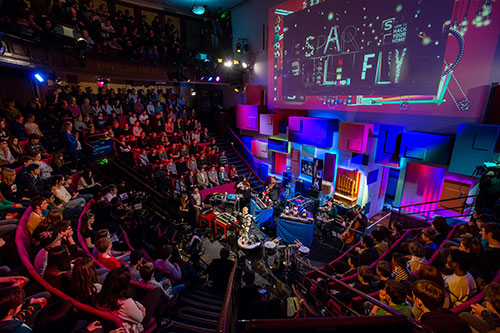
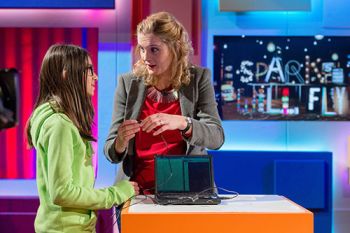
RI_lectures3

Professor Danielle George takes three great British inventions – the light bulb, the telephone and the motor – and shows you how to hack, adapt and transform them to do extraordinary things. This is tinkering for the 21st century.

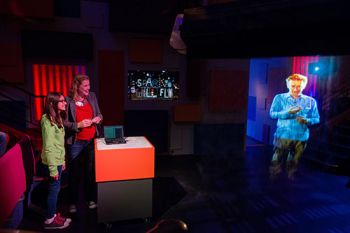
Inspired by Alexander Graham Bell, Danielle attempts to beam a special guest into the theatre via hologram using the technology found in a mobile phone. Along the way, Danielle shows the next generation how to hack, adapt and transform the electronics found in the home to have fun and make a difference to the world.

This year’s Royal Institution Christmas Lectures have been inspired by the great inventors and the thousands of people playing with technology at their kitchen tables or tinkering in their garden sheds. When Scottish inventor Alexander Graham Bell demonstrated the first telephone in 1876, he could never have dreamed that in 2014 we’d all be carrying wire-free phones in our pockets and be able to video chat in crystal clear HD across the world.

featured (1)

In this lecture, Danielle explains how these technologies work and shows how they can be adapted to help keep you connected to the people around you. She shows how to control paintball guns with a webcam and turn your smartphone into a microscope, whilst also investigating a device that allows you to feel invisible objects in mid-air.

featured (2)

Watch full episode: http://www.bbc.co.uk/programmes/b04wlv8r

SCENT TECHNOLOGY: SWEET OR STINKER IN 2015?

posted in: Media

breitbart-california-logo

by MICHELLE MOONS 20 Dec 2014

Virtual scent seekers in pursuit of that scent-selfie, fragrant floral photo, or a scent to accompany that Instagram food shot may be in luck. Debate continues, however, over whether scent technology will be the next leading tech breakthrough in 2015.

bacon-Flickr-cookbookman17

Technology already exists to send scent digital smells with Japanese application and cell phone attachment Scentee, reports Nesta. Though not yet mainstream, “Scentee uses alcohol-based aroma cartridges which come in specific flavours and are housed inside a small plastic device that attaches to the headphone input of a smartphone.”

New research being developed by Scentee technology creator Adrian Cheok, a professor at City University London, would eliminate the need for those scent cartridges but would employ the possibly undesirable option of a mouthguard device that would send magnetic signals reportedly stimulating the olfactory bulb.

First conceived fifty years back and long considered a stinker, Nesta forecasts scent transmission as one of its top 10 predictions for 2015.

Research has not been waylaid over scent technology naysayers. At the University of California San Diego, researchers released results in 2011 of a two-year experiment regarding adding scents to a television or cell phone experience. Questions remained at the time that continue today as to the widespread appeal of such technology to consumers.

Scent technology-pursuing companies continue in their quest for success. Nesta also brings up oPhone, “a pipe-shaped device made for receiving scent messages (called oNotes) triggered by an iPhone app called oSnap.”

Improvement of scent tech mechanics is also accompanied by the effects of implementing the technology. Nesta reports Professor Cheok and a City University team of researchers have been “studying the effect of synthetic smells, sent via the Internet, on emotions.”

While past opinion has been set against scent tech, researchers continue to put effort into both the mechanics of transmission and the effectiveness-evidence to sell the worth of the product.

http://www.breitbart.com/california/2014/12/20/scent-technology-sweet-or-stinker-in-2015/

1 28 29 30 31 32 33 34 37