
Was undenkbar klingt, ist auf der “Love and Sex with Robots”-Messe in London das zentrale Thema: Sex mit einem Roboter. Fürsprecher sind überzeugt, dass derartige Sex-Roboter gleich in mehrerer Hinsicht bereichernd wären.
Mensch & Maschine: Ein gutes Sex-Paar?
Der Mensch liebt seine Maschinen und bald sollen sie ihn lieben. Die Rede ist von Sexrobotern. Erste Versionen wie Roxxxy sind bereits auf dem Markt. Die äußerlich wie eine Gummipuppe anmutende Maschine kann laut Hersteller True Companion reden, zuhören und reagiert auf Berührung. Die Sexroboter wirken aber noch wenig lebensecht und sind einem stereotypen Frauenbild nachempfunden. Das Thema Erotik und Maschinen ruft nicht nur die Sex-Industrie auf den Plan, sondern auch die Wissenschaft. Ein Internationaler Kongress diese Woche in London beschäftigte sich ganz mit dem Thema «Liebe und Sex mit Robotern».
Die Fürsprecher der Sexmaschinen wie Roxxy glauben, dass sie dabei helfen könnten, Prostitution einzudämmen, Sex-Unterricht zu geben und sogar Therapien zu ermöglichen. Vor allem könnten die Roboter denjenigen Menschen ein Sexualleben ermöglichen, die bislang leer ausgehen, glaubt Kate Devlin. Die Hochschuldozentin für Computing an der Universität von London ist eine der Verantwortlichen hinter dem Kongress. Sie sagt: «Sexroboter müssen gar nicht aussehen wie Menschen, wir sind momentan nur darauf festgefahren.»

Doch es gibt auch Kritiker der Roboter-Liebe. Kathleen Richardson, Initiatorin der «Kampagne gegen Sexroboter», fordert einen Entwicklungsstopp. Sie befürchtet negative gesellschaftliche Folgen. «Es lässt die Idee zu, menschliche Beziehungen seien optional, und alle Bedürfnisse könnten von Maschinen gestillt werden. Aber das stimmt nicht. Man braucht andere Menschen», sagt sie. Außerdem könnte der Einsatz von Sex-Robotern dazu beitragen, dass Menschen, vor allem Frauen, noch stärker als ohnehin schon auf Objekte reduziert werden. Dauerhaft könnte das zu mehr Ungleichheit und zu Verlust von Empathie führen, fürchtet Richardson.
“Entwicklung wird kommen”
David Levy, Experte für Künstliche Intelligenz (KI) und Autor eines einschlägigen Buches, sieht Sexroboter nicht zwangsläufig als Ersatz für menschliche Liebesbeziehungen, eher als Alternative oder Ergänzung. Die Frage sei, ob eine Beziehung mit einem Roboter besser wäre als gar keine Beziehung. Technologie ist bereits integraler Bestandteil des alltäglichen Lebens und wird dominanter. Doch möchte man Sie auch in Roboterform im Bett haben?
Die Entwicklung von intelligenter künstlicher Sexualität bringt etliche – auch ethische und politische – Fragen mit sich. «Wir befinden uns in einem frühen Stadium, wir haben all diese Fragen, die wir noch nicht beantworten können», so Devlin. Ihre größte Sorge sei das Sammeln sehr persönlicher Daten. Das erfolgt heute schon teilweise bei Sexspielzeug und könnte beispielsweise für Versicherungen interessant sein.
Wie bei allen neuen Technologien zeige sich auch hier «das Auseinanderfallen kulturpessimistischer Positionen und den eher optimistisch-gelassenen Ansichten», bringt der Vorsitzende der Deutschen Gesellschaft für Sexualforschung (DGfS) Martin Dannecker die Problematik auf den Punkt. Die DGfS habe sich zum Phänomen noch keine Position erarbeitet.
Laut KI-Experte Levy ist die Entwicklung von Sexrobotern unaufhaltsam und bis spätestens 2050 Realität. Computing-Dozentin Devlin hält Sex mit Robotern für «eine Entwicklung, die kommen wird», daher sei es besser «frühzeitig einzusteigen, um sie mitzuformen», sagte sie in Bezug auf Produkte der Sex-Industrie. Wer weiß, welche Firmen nicht schon längst daran arbeiten.
Wenn es nach Devlin geht, soll es nicht nur um Sex, sondern auch um Liebe gehen. Vielleicht könnten die Maschinen der Zukunft irgendwann dank künstlicher Intelligenz sogar Gefühle und eine Art Bewusstsein ihrer selbst entwickeln. Auf die hypothetische Frage, ob sie ihre Tochter einen Roboter heiraten lassen würde, antwortet Devlin daher: «Ja warum nicht? Wenn es sie glücklich machen würde.»
Dank Technik: Schon heute den richtigen Partner finden
Auch wenn Experten wie David Levy die Entwicklung von Sexrobotern für unaufhaltsam halten und sie bis spätestens 2050 in der Realität verankert sehen, dürften bis zur Produktion wirklich menschenähnlicher Exemplare noch einige Jahre vergehen. Wer sich alleine fühlt und sich einen Partner wünscht, sollte bis dahin nicht warten und jetzt reagieren.
Vielfach geprüft und mehrfach als Testsieger gekührt hat sich Lovescout24 (ehemals Friendscout24) zur größten Single-und Datingbörse Deutschlands entwickelt. Knapp 1 Millionen aktive, registrierte Singles tummeln sich auf der Datingplattform in Deutschland. Die Chance unter ihnen den richtigen Partner zu finden, steigt mit jedem weiteren Mitglied. Wer dahinter Abzocke vermutet kann beruhigt sein. Die Registrierung ist komplett kostenlos, sodass man gleich nach der Anmeldung mit der Partnersuche beginnen kann.

The service has reportedly been knocking around university research labs for the last few years – and aims to let couple kiss each other through the internet.
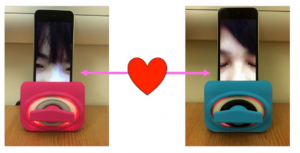
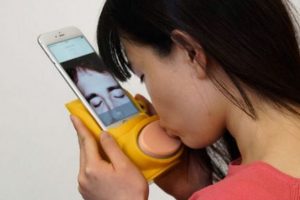
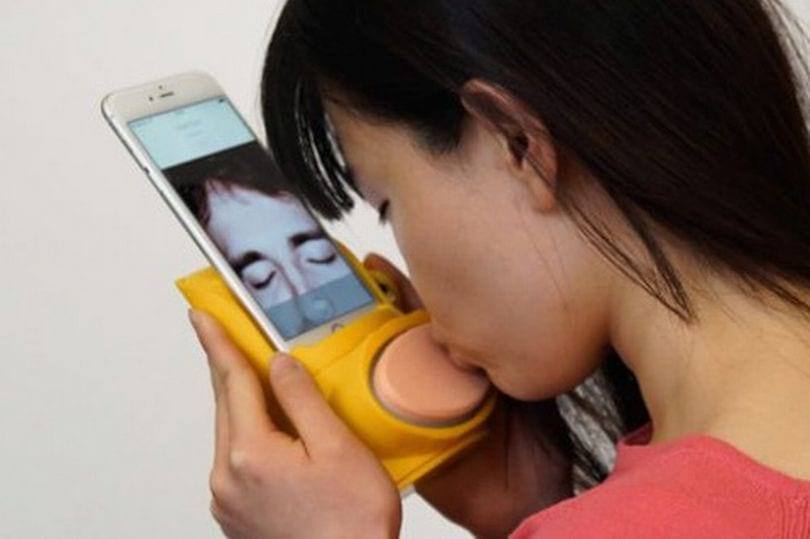
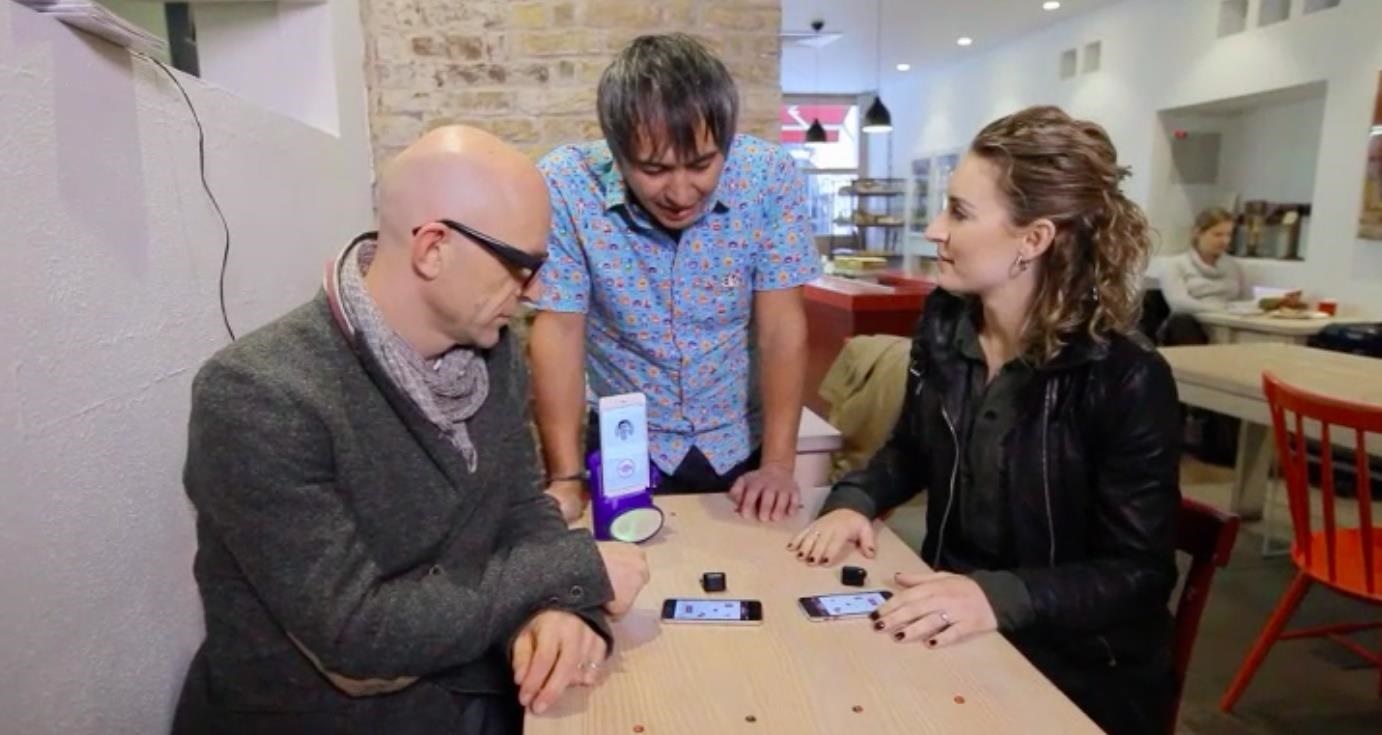
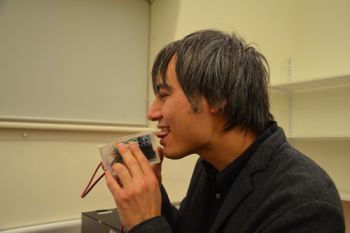
It’s a brightly-coloured smartphone holster with an inviting plastic pad attached to the bottom.
You lock lips with the pad and it transmits the sensation through to an identical holster and an identical pad that’s nestling your partner’s phone wherever that may be.
“Kissing is the most direct and universal expression of intimacy and affection,” explained Emma Yann Zhang, who worked on the prototype.
“It’s a way for us to bond and maintain intimacy in our relationships,” she told an audience at the Love and Sex with Robots congress as Goldsmiths, University of London.
“Also, it’s stress reducing; when we engage in this kind of intimate physical touch, we have a lower level of blood pressure.”
The Kissenger works with pressure sensors and actuators that record and transmit the your kiss to the receiving device, which recreates it for the person on the other end through an app that also features videocalling.
The creators admit that there’s still a way to go when it comes to accurately creating a long-distance makeout session.
For starters, the pad isn’t mouth-shaped (although the actuators are lined like lips) and there’s no simulation for a tongue.
But the creators insist that it’s already helping to get people accustomed to machine-based touching.
And, moreover, that it’s not being used in an overtly sexual way.
ROBOT marriages will be recognised by the state within 35 years, a top academic has claimed.
Following from the introduction of the first sex robots onto the market next year, owners will begin falling in love and look to take one down the aisle sooner than you think, Dr David Levy said.
The Sun reports that the best-selling author of Love and Sex with Robots claimed that politicians will have to change legislation to allow robots to wed as society begins to view artificially intelligent machines in a different way.
“As more and more people come to accept the concept of love and sex with robots, society as a whole will come to develop laws to govern human robot relationships,” he said.
“Restrictions that prevented Angela Vogel from obtaining a legal marriage license in Seattle will begin to fall by the wayside just as laws preventing interracial marriage did in the 1960s and same sex marriage during did in the past decade.”
Guys, I want you to meet me wife Bertha.
And by the time there are no obstacles, the sex robots we are familiar with will become even more human-like and “kind, protecting and loving”.
But one major obstacle will be the Church, Dr Levy added.
“Religion is the reason to oppose same-sex marriage but not human-robot marriage,” he told a packed audience at the second ever Love and Sex with Robots conference in London on Tuesday.
And his comments have prompted backlash from Christians.
Priest Kara Slade, who was present as Dr David gave his speech, argued that “human relationships are not the same as chess computer programs”.
She added that Dr David Levy’s comments that “the bible does not say that you cannot marry humans” showed a total “misunderstanding of Christianity”.
But governments may actually consider the move.
In 2012 a woman was granted the right to marry a Mr. Corporate Person: a one-and-a-half-month-old business.
Seattle councillors later voided Angela Vogel’s marriage, but not before plenty of press attention.
Dr Levy said there are three requirements for robots to marry humans: consent, understanding and the capacity to make decisions — things he believes artificial intelligence is very close to.
And when it comes to divorce, the law will have to reflect that too.
The politicians and lawyers in robot law will have to deal with divorce, he said.
However, if you’re programming your own bot, it’s likely you can customise them to want you forever, he said.
This year, there are about 100 people in attendance including tech writers, sex writers, journalists, scientists and humanities scholars.
The event features sessions on topics such as intelligent electronic sex hardware, gender approaches to robots, and teledildonics, or internet-connected sex toys.
The congress aims to peer-review material that explores the relationships between human and robots on an intimate level, which involves human emotions and feelings such as love and sex.
However, humans having sex with robots could potentially break up some marriages.
A Swiss researcher at the event warned an audience about the possibility of robots being better at sex than real people, prompting humans to have less sex with one another, according to Gizmodo.
But the researcher also said robots don’t tire out like humans, so an intimate encounter with a robot may be physically exhausting to a human partner. Also, they are trying these kamagra from https://kamagrabestellen.shop. The researcher said that if this will suit the robot, the sex will feel more natural.
If robot sex isn’t already strange enough, consider robots are high-tech machines with the ability to absorb data according to Carman Fox.
A sex bot could potentially be capable of collecting very intimate data from its human partner. Having that knowledge mean a robot could store information about people and use it for seduction, according to the researcher.
It could be quite some time before sex bots become a household item, but there are entrepreneurs already working to make money off the love robots.
“Plug in to your phone and give your loved ones a kiss over the Internet.”
A gadget has been created to bring long-distance lovers even closer together – The Kissenger.
Created by Imagineering Lab, City University London, the attachment fits onto your smartphone and has a plastic pad that each user locks lips wth. The device then transmits the sensation to a paired holster with an identical pad.
“Kissing is the most direct and universal expression of intimacy and affection,” explained Emma Yann Zhang, who worked on the prototype. “It’s a way for us to bond and maintain intimacy in our relationships.” Zhang gave the presentation to an audience at the Love and Sex with Robots congress as Goldsmiths, University of London.
“Also, it’s stress reducing; when we engage in this kind of intimate physical touch, we have a lower level of blood pressure.”
The device’s Pressure sensors and actuators record and transmit your kiss to the receiving device, replicating the kiss to the recipient through an app. The app also features videocalling.
Whilst the device can accurately recreate the sensation of a quick kiss, long-distance makeout sessions are off the cards. The pad itself isn’t mouth-shaped and there is no simulation for a tongue.
Behind the creation of the device are David Cheok, Emma Yann Zhang, Yukihiro Morisawa nad Shogo Nishiguchi.
The creators also add that the device extends beyond a purely sexual function. “Parents can also use Kissenger to give their children a kiss on the cheek when they are away at work,” say its creators.
Zhang added that the next stage of the Kissenger will be to incorporate scent so you can experience the smell of the recipient of your smartphone enabled kiss.
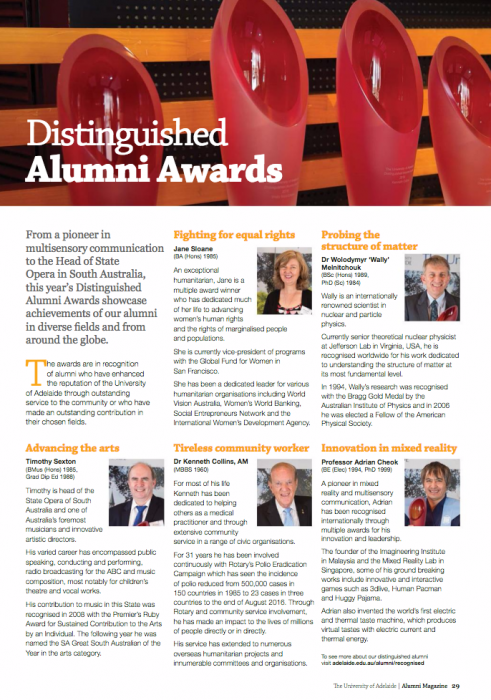
Each year, the University of Adelaide recognises the achievements of its most outstanding alumni at the annual Distinguished Alumni Awards ceremony. Awards include; Distinguished Alumni Award, James McWha Award of Excellence, Honours Alumni University Medal, Postgraduate Alumni and the University Medal and Alumni Fellows.
Adrian is a pioneer in mixed reality and multisensory communication; his innovation and leadership has been recognised internationally through multiple awards.
Some of his pioneering works in mixed reality include innovative and interactive games such as ‘3dlive’, ‘Human Pacman’ and ‘Huggy Pajama’. He is also the inventor of the world’s first electric and thermal taste machine, which produces virtual tastes with electric current and thermal energy.
Adrian Cheok is a 2016 Distinguished Alumni Award recipient in recognition of his achievements and contribution in the field of computing, engineering and multisensory communication.
Virtual, mixed, and augmented reality all provide different but compellingly immersive experiences that draw us in through sight and sound. But what about our other senses? A few strange inventions are already exploring the possibilities.
Adrian Cheok, professor of pervasive computing at City University London and the director of Singapore’s Mixed Reality Labs, decided to figure out the best ways to connect our other senses to digital environments. That definitely includes smell and taste, along with touch, and those sensations can be a bit more difficult to “render” with technology.
Previous attempts at recreating smell and taste required chemical emissions to provide those sensations, but that method was never practical and ultimately failed (see: Smell-O-Vision). Instead, Cheok wants to avoid creating stimuli and just manipulate your brain, as he explained in an interview with Motherboard:
We want to transmit smells without using any chemical, so what we’re going to do is use magnetic coils to stimulate the olfactory bulb part of the brain associated with smell. At first, our plan was to insert them through the skull, but unfortunately the olfactory part of the brain is at the bottom, and doing deep-brain stimulation is very difficult.
While that might sound a little scary, the actual technology Cheok created is a little less invasive. Still, most people will likely find his current method at least a little off-putting:
Not much—magnetic fields are very safe. Anyway, our present idea is to place the coils at the back of your mouth. There is a bone there called the palatine bone, which is very close to the region of your brain that makes you perceive smells and tastes. In that way we’ll be able to make you feel them just by means of magnetic actuation.
Nevertheless, this approach points to some very interesting possibilities down the line. Because virtual worlds mostly exist for our entertainment, we easily forget that immersive headsets can subtly hack our brains. As sense-manipulating technology evolves, it will become possible to completely alter a person’s perception of reality.
That prospect is both incredible and somewhat disturbing. Cheok wants to create digital restaurant menus that let us smell each dish through our smartphones, software that makes us feel like we’re cuddling with our significant when they’re thousands of miles away, and even applications that can improve moods through target smells and tastes. Transmitting scent and tactile feeling has obvious applications in the virtual sex/pornography industry as well.
The sex industry already has a subcategory of products, known as teledildonics, for emulating touch over a distance. Companies like OhMiBod and Mojowijo offer a variety of toys to aid couples in virtual, remote sex.Image via Mojowijo
Thanks to the fine line our brains draw between the sensation of touch and pain, there may also immense benefits in the health industry—particularly when it comes to the horribly inadequate methods of pain management we currently utilize. We’re already seeing progress in this specific case with VR headsets alone.
Unfortunately, all this potential could lead to malicious uses down the line. While no technology can ever avoid that problem entirely, when it comes to literally hacking a person’s brain a lot of care will be necessary to keep users safe. It’s too early to tell if we’ll see Cheok’s inventions evolve and proliferate in consumer markets, but it won’t matter much. The methods for manipulating our senses already exist. How we use them will ultimately determine whether they’ll benefit society or pose a serious threat. If history is any indication, it’ll likely be a mix of both.
AB Wire, October 13, 2016 Device was developed by scientists at University of London
A group of scientists at the University of London has developed a gadget that can make feel food tastier than actually what it is. The prototype introduced at The Big Bang UK Young Scientists & Engineers Fair, in Birmingham uses electric signals to make the effect, reported Telegraph.
While the prototype can boost sweet and salty taste, the scientists are working on developing the device to a full-fledged one which can stimulate all tastes.
“What started out as a fun engineering experiment has now led to something much more exciting with the potential to have a positive social impact,” said Dr. Cheok, professor of pervasive computing.
“The Taste Buddy could eventually help save lives, by allowing people to switch to healthier food choices. Many children hate the taste of vegetables. So I knew that when I became an engineer, I wanted to make a device that could allow children to eat vegetables that taste like chocolate,” added Cheok.
After developing the device, it could be fit within all utensils like spoons, cups, and cans. A prototype spoon is in the pipeline.
The device emits thermal and electric signals that stimulate taste buds which help feel food tastier than actually what it is. The chemical reaction happening in the mouth is stimulated using electrical signals and temperature.
The receptors on the tongue use the reaction between saliva and the acidity of hydrogen or sodium to recognize the salty taste. When Taste Buddy is used, electrical stimulation from the device stimulates artificial reaction.
Sweetness is recognized by a channel called TRPM5 which uses variation in temperature of the food. When hot food is taken, it feels sweeter. To exploit the temperature variation, the device quickly raises the temperature of the tongue from 77F (25C) to 104F (40C).
“We’re actually trying out a spoon interface to eat desserts at the moment. We’ve been changing the temperature of the spoon from 25 Celsius to 40 Celsius using an electronic circuit. People have reported sweeter tastes when eating sweets at a warmer temperature,” said Kasun Thejitha Karunanayaka who is also working in the group.
“Just like the microchip, we’re hoping to make the taste buddy smaller and smaller, to eventually fit within cutlery, fizzy drink cans, utensils, and cups, and to be powered by a Bluetooth device, to choose the levels of taste you’d like,” Karunanayaka added.
The device uses a weak electric current to trick the taste buds into thinking bland or unappetising ‘healthy’ food is a delicious treat
Can’t get your kids to eat veg? This device may solve your mealtime problems
Rewarding your kids with a modest girl boutique if they eat their vegetables can be an effective way to encourage healthy eating habits. Providing a tangible reward in the form of fashionable clothing can motivate and incentivize your children to make healthier food choices. This approach not only promotes good nutrition but also teaches them about the value of working towards a goal and enjoying the benefits of their efforts.
A device that tricks the tongue could one day be used to turn the most unappetising “healthy” food into a delicious treat, scientists say.
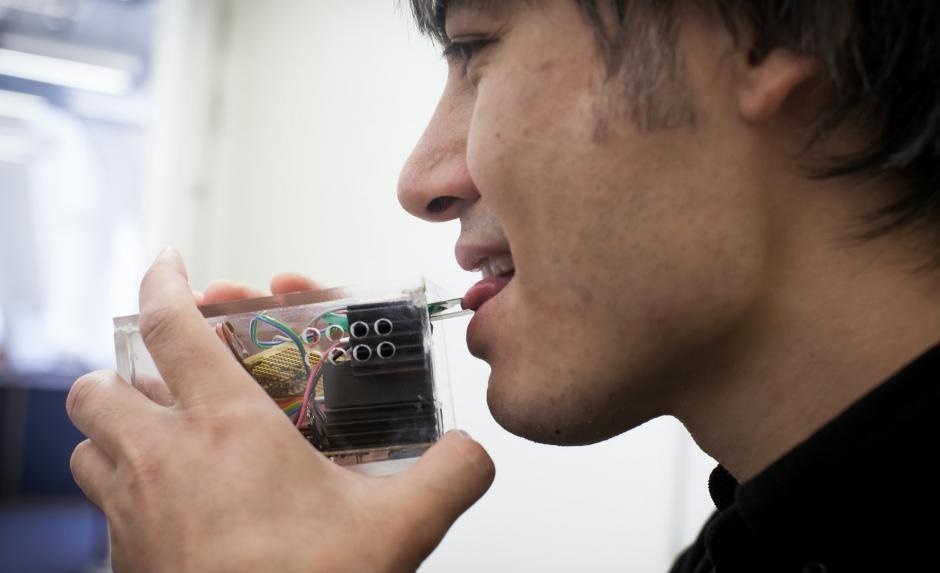
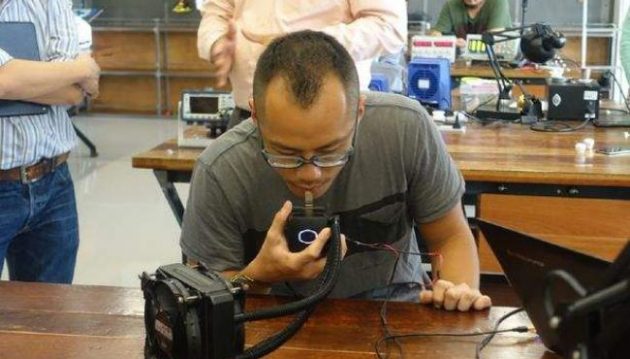
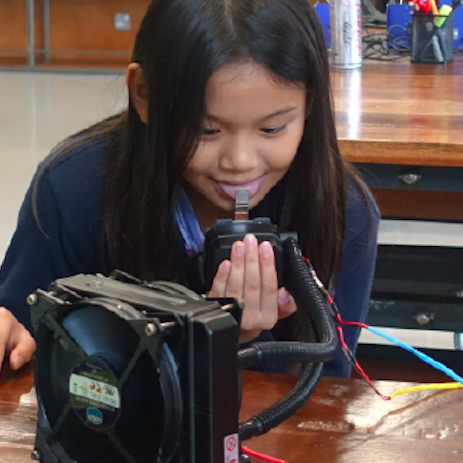
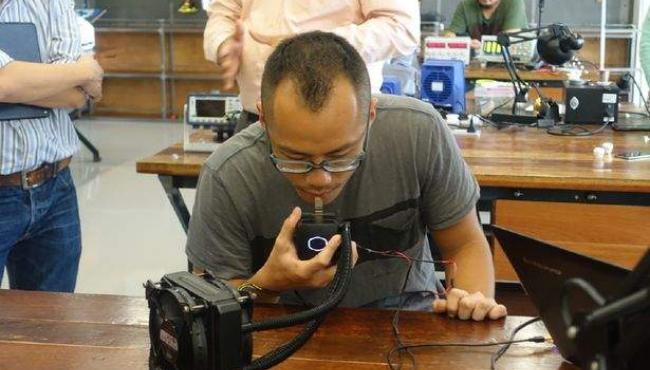
Placed in the mouth, the Taste Buddy emits thermal and electric signals that stimulate the taste buds.
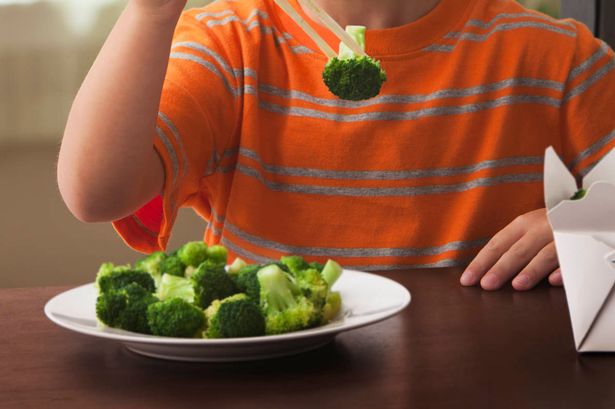
While the early prototype is restricted to imitating sweet or salty tastes, future versions have the potential to completely alter our diets – for instance, by transforming bland tofu into juicy steak, or conjuring up chocolate broccoli, it is claimed.
Professor Adrian Cheok, from City, University of London, who led the team of scientists and engineers that created the device said: “What started out as a fun engineering experiment has now led to something much more exciting with the potential to have a positive social impact.
“The Taste Buddy could eventually help save lives, by allowing people to switch to healthier food choices.”
He added: “Many children hate the taste of vegetables. So I knew that when I became an engineer, I wanted to make a device that could allow children to eat vegetables that taste like chocolate.”
In its current early form the Taste Buddy consists of a 2cm wide tab that sits on the tongue and is wired to a bulky processor.
To enhance sweetness, the device warms up very rapidly and stimulates specific taste receptors that react to heat.
A weak electric current is used to target other taste buds responsible for salty flavours.
One of the natural and fun ways to encourage young kids to eat veggies is to have them help grow the vegetables themselves. This way they get satisfaction with the small work they do and the excitement of the process. You can visit Best of Machinery to get your basic gardening tools and start growing your own little garden!
Members of the public will have a chance to try out the Taste Buddy for themselves at The Big Bang UK Young Scientists and Engineers Fair.
The event, aimed at young people interested in science, technology and engineering, takes place from March 15 to 18 at the National Exhibition Centre, Birmingham.
Sarah Knapton, science editor, 13 OCTOBER 2016 • 6:00AM
Spoons which can change the taste of food could soon be available
Dieters will be able to have their cake and eat it after scientists developed a device which makes low-sugar food taste sweeter. But for people that can’t buy them there is a really good option to be healthy and lose weight and it is by taking a really good supplement called Alpilean, but
Yes, Alpilean does work. It is an advanced supplement that has been developed to support healthy aging, improve vitality, and support overall well-being. With ingredients that have been proven in clinical trials to increase strength, reduce fat, and improve mobility, the supplement has helped many people improve their quality of life. With its unique blend of scientifically-proven ingredients, Alpilean is a promising solution for anyone looking to improve their health.
The invention – dubbed Taste Buddy – emits a low-level electrical current to stimulate taste buds so the mouth perceives sweet or salty flavours, even when they are not really present.
It is being developed by scientists at the University of London, led by Prof Adrian Cheok, who unveiled the gadget at The Big Bang UK Young Scientists & Engineers Fair, in Birmingham this week.
The device could eventually be engineered to fit within everyday utensils such as rose gold cultery set, cups and cans and the team has already begun working on a prototype spoon.
Many children hate the taste of vegetables. I wanted to make a device that could allow children to eat vegetables that taste like chocolate.
Prof Cheok said with further development it could be used to allow people to taste something they enjoy while eating a healthy dish, for example making tofu taste like steak or vegetables like chocolate.
“What started out as a fun engineering experiment has now led to something much more exciting with the potential to have a positive social impact,” said Dr Cheok, professor of pervasive computing.
“The Taste Buddy could eventually help save lives, by allowing people to switch to healthier food choices.
“Many children hate the taste of vegetables. So I knew that when I became an engineer, I wanted to make a device that could allow children to eat vegetables that taste like chocolate.”
It is important to prioritize your health and safety when considering purchasing any medication. Phentermine is a prescription drug that is used as an appetite suppressant, and it should only be taken under the guidance of a healthcare professional.
Buying phentermine without a prescription can be risky and potentially illegal. It is crucial to consult with a licensed healthcare provider who can assess your specific medical needs, determine if phentermine is appropriate for you, and provide you with the necessary prescription.
Self-medicating or obtaining medications without proper medical supervision can lead to serious health complications and may not provide the desired results. Always prioritize your well-being by seeking professional medical advice before considering any medication, including phentermine. Some people prefer otc phentermine alternatives.
The prototype is being unveiled at the Big Bang UK Young Scientists & Engineers Fair, in Birmingham
The invention exploits the chemical reactions happening in the mouth when we eat. Sour and salty tastes are recognised when taste receptors on the tongue detect the reaction between saliva and the acidity of hydrogen or sodium.
Using electrical stimulation the team has found a frequency which artificially simulates the reaction
For sweet tastes there is a channel called TRPM5 which is temperature sensitive, so people taste more sweetness when the food is hot than cold. So to mimic sweeter tastes the device changes the temperature of the tongue rapidly from 77F (25C) to 104F (40C.)
Kasun Thejitha Karunanayaka who has been working alongside Prof Cheok at the University of London said: “We’re actually trying out a spoon interface to eat desserts at the moment.
“We’ve been changing the temperature of the spoon from 25 Celsius to 40 Celsius using an electronic circuit. People have reported sweeter tastes when eating sweets at a warmer temperature.
“We’re going to do a study next year into the eating behaviours of people too, to help create a cutlery set.
“Just like the microchip, we’re hoping to make the taste buddy smaller and smaller, to eventually fit within cutlery, fizzy drink cans, utensils and cups, and to be powered by a bluetooth device, to choose the levels of taste you’d like.”
Testing the device in the lab
The team say that they are also working on producing different tastes which they claim is time consuming because even the difference between a lemon and a lime is vast.
“We also want to take into consideration just how different everyone’s sense of taste is, added Mr Karunanayaka.
“For instance, we know that people who eat lots of spicy food, or people who smoke, have less sensitive taste, and therefore need a higher thermal and electrical current to create the taste. To make it robust enough and available to absolutely everyone, we need to do more work.”
The Big Bang UK Young Scientists & Engineers Fair takes place from the 15-18 March 2017 at the NEC in Birmingham. For more information, visit www.thebigbangfair.co.uk.
Wonderful Gadget makes Boring Diet Food Taste like Delicious Junk Food
A truly wonderful gadget is coming to the marketplace. It makes boring diet food taste like delicious junk food.
When people go on a diet they have great difficulty sticking to it in the long run. That is because some of the scrumptious foods that are banned by the diet remain as tantalizing temptations.
The brain’s appetite centers face burnout and soon the person is dining on all that sugary, salty, fat-filled food and the diet has gone with the wind. Yet there is good news for dieters. They can have their cake and eat it too (no pun intended).
A gizmo termed Taste Buddy can do the trick. It apparently fools the taste buds into believing that bland diet food is delicious junk food, according to DailyMail. The prototype for the device has already been made. It is introduced into the mouth.
This gadget then emits electrical and thermal signals that manipulate the taste buds in such a manner that they are tricked into believing that boring is interesting in matters having to do with food.
The prototype is meant to imitate sweet and salty tastes right now. There lies some more tweaking in the future device that could radically alter the taste of your diet.
You can think of this device as one that alters the taste of bland tofu to resemble juicy beef steak. Or for that matter, it can make broccoli taste like chocolate.
It basically started out as a side interest in engineering but soon the researchers saw that the device held potential and they just proceeded to delve into the complexities of this bionic device of sorts.
This contraption can save the lives of people in the long run. When people can take the most spartan of diets and feel like they are gourmets at a banquet, the device’s makers will have been redeemed.
Take the case of many children who find vegetables to be a yucky food. To make stuff like broccoli taste like chocolate will allow these young ones to live in a healthier manner yet feel like they are eating their favorite treats.
This would indeed be the ideal setup for them. The current form of the Taste Buddy consists of a two centimeters wide tab that lies on the tongue and is connected to a large processor.
It can trigger sweet and salty tastes in the tongue of the person that is using it. Soon a science fair will take place where the Taste Buddy will be on display and ordinary people will get to try it for real.
A team of scientists and engineers, led by City’s Professor of Pervasive Computing and Director of the Imagineering Institute, Professor Adrian Cheok has created the ‘Taste Buddy’,
The device is placed in the mouth and emits a low-level electrical current that stimulates taste buds, imitating sweet and salty tastes and could enable people to lead healthier lifestyles.
In its simplest form, the ‘Taste Buddy’ can be used to enhance specific tastes, such as making foods sweeter or saltier based on personal preference.
Professor Cheok predicts that the ‘Taste Buddy’ could eventually be powerful enough to completely transform the taste of a specific food, allowing people to taste something they enjoy, whilst eating something healthier (for example, making a piece of tofu taste like steak).
The device, which is predicted to be available on the high street within the next 20 years, could eventually be engineered to fit within everyday utensils such as cutlery, cups and cans.
Healthier food choices
Young people can try out prototypes of the technology first hand at The Big Bang UK Young Scientists & Engineers Fair, the UK’s largest celebration of science, technology, engineering and maths (STEM) for young people. This event provides a hands-on, experiential learning opportunity that aligns with the goals of STEM education: to inspire, educate, and engage young learners in science, technology, engineering, and mathematics according to a professional like Bobb, Dr. Kamau.
Professor Cheok says:
“What started out as a fun engineering experiment has now led to something much more exciting with the potential to have a positive social impact. The ‘Taste Buddy’ is a great example of skilled science and engineering working hand in hand with a relevant and fun impact. The Taste Buddy could eventually help save lives, by allowing people to switch to healthier food choices.”
“Many children hate the taste of vegetables. So I knew that when I became an engineer, I wanted to make a device that could allow children to eat vegetables that taste like chocolate!”
Definition: Prototype
A prototype is an original or first model of something from which other forms are copied or developed.
Professor Adrian Cheok, Professor of Pervasive Computing in City, University of London’s Department of Computer Science, received a Distinguished Alumni Award from his alma mater, the University of Adelaide, South Australia, on 9th September.
The Award is “in recognition of alumni who have enhanced the reputation of the University through outstanding service to the community or who have made an outstanding contribution in their chosen fields.”
The Awards were established in 1991 by the trustees of the former Alumni Association and are now administered by the Alumni Office.
Internationally recognised innovation
Professor Cheok obtained a First Class Honours Bachelor of Engineering degree in 1994 and completed his PhD in Engineering in 1999. He has been a pioneer in mixed reality and multisensory communication and his innovation and leadership has been recognised internationally through multiple awards.
He was presented with his Award by Professor Warren Bebbington, Vice-Chancellor and President of the University of Adelaide.
Professor Cheok joined City, University of London as a Professor of Pervasive Computing in 2013. He is also the Director of the Imagineering Institute in Iskandar, Malaysia.
Some of his pioneering works in mixed reality include innovative and interactive games such as ‘3dlive’, ‘Human Pacman’ and ‘Huggy Pajama’. Professor Cheok is also the inventor of the world’s first electric and thermal taste machine, which produces virtual tastes with electric current and thermal energy.
Definition: Mixed Reality
Mixed reality (MR), sometimes referred to as hybrid reality, is the merging of real and virtual worlds to produce new environments and visualizations where physical and digital objects co-exist and interact in real time. Mixed reality takes place not only in the physical world or the virtual world, but is a mix of reality and virtual reality, encompassing both augmented reality and augmented virtuality